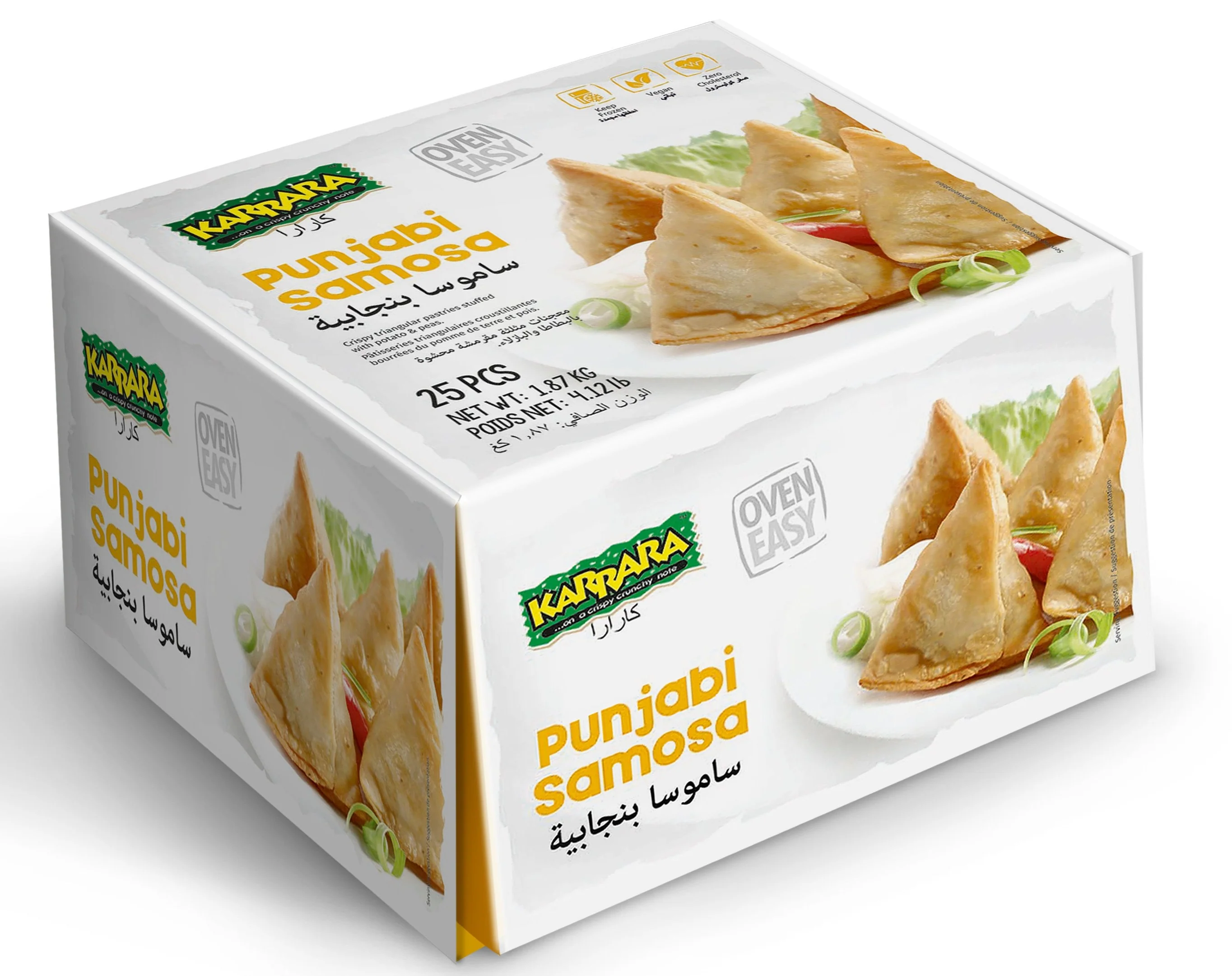
Samosa & Sweet Factory - Punjabi Samosa - 100g
Sweet and Samosa Factory - Punjabi Samosa 100g 20ct | Delivery in GTA
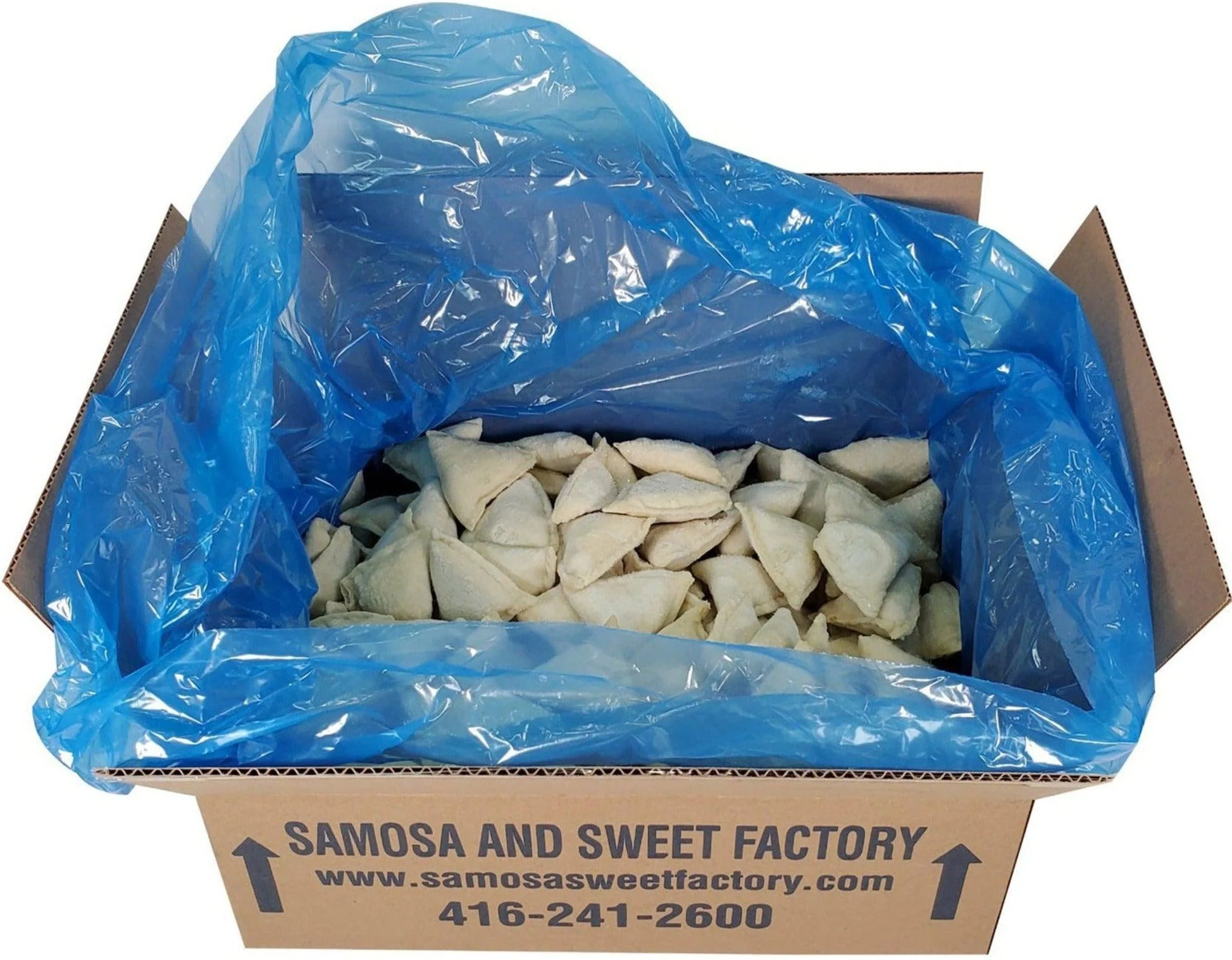
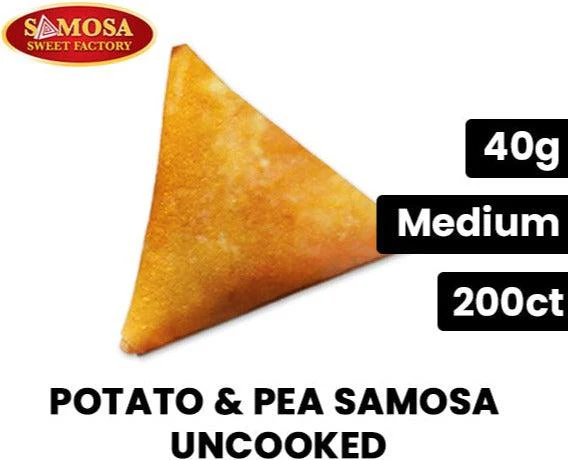
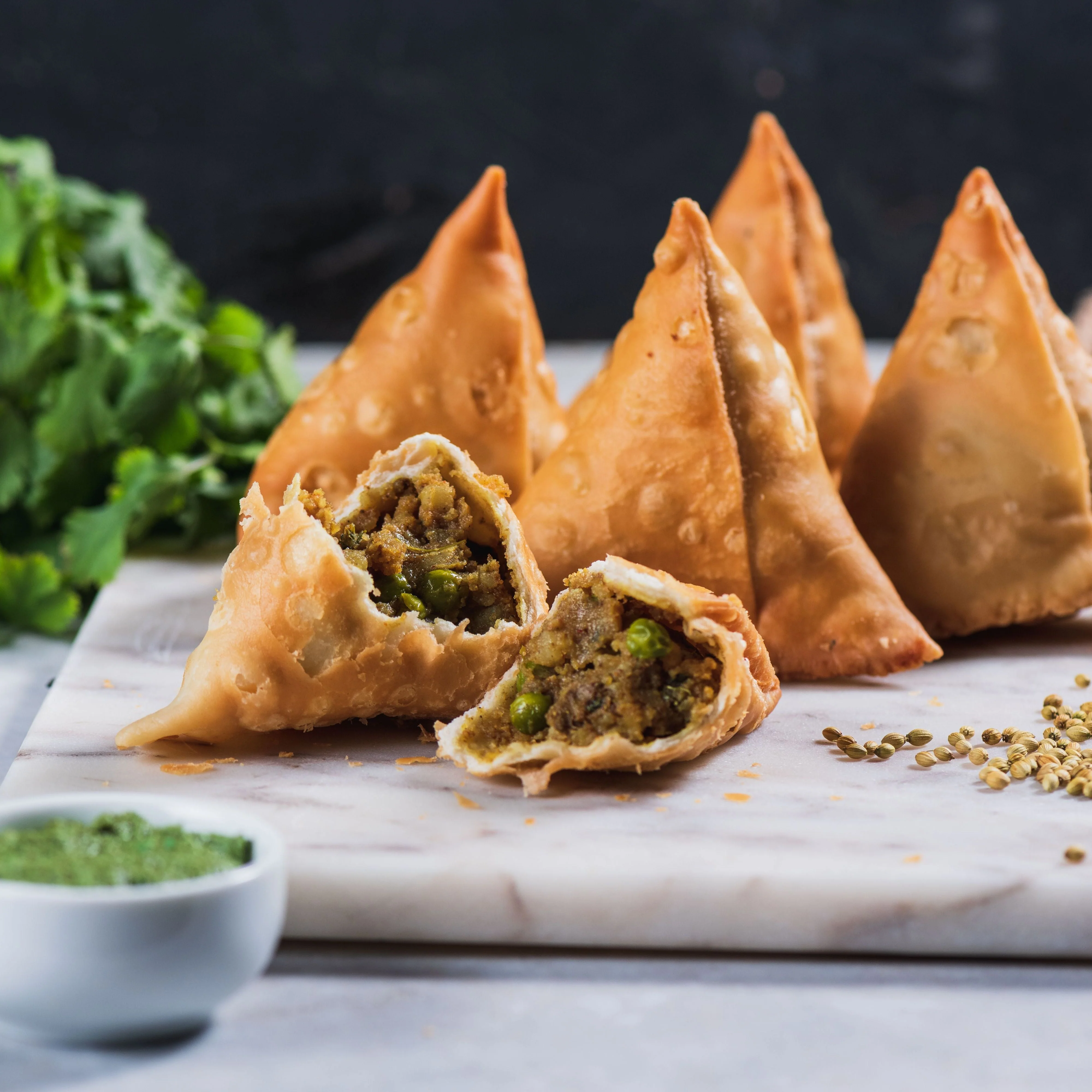
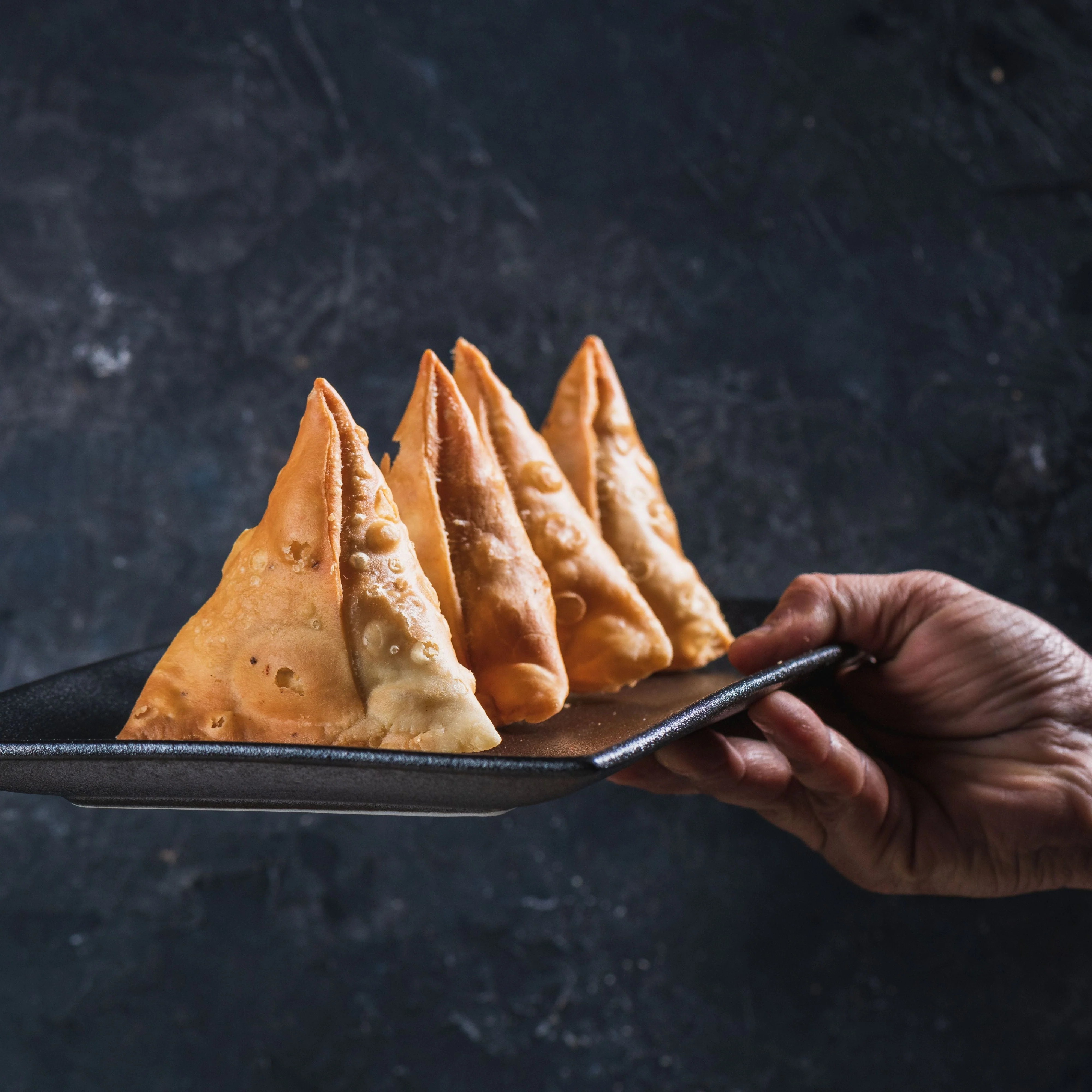
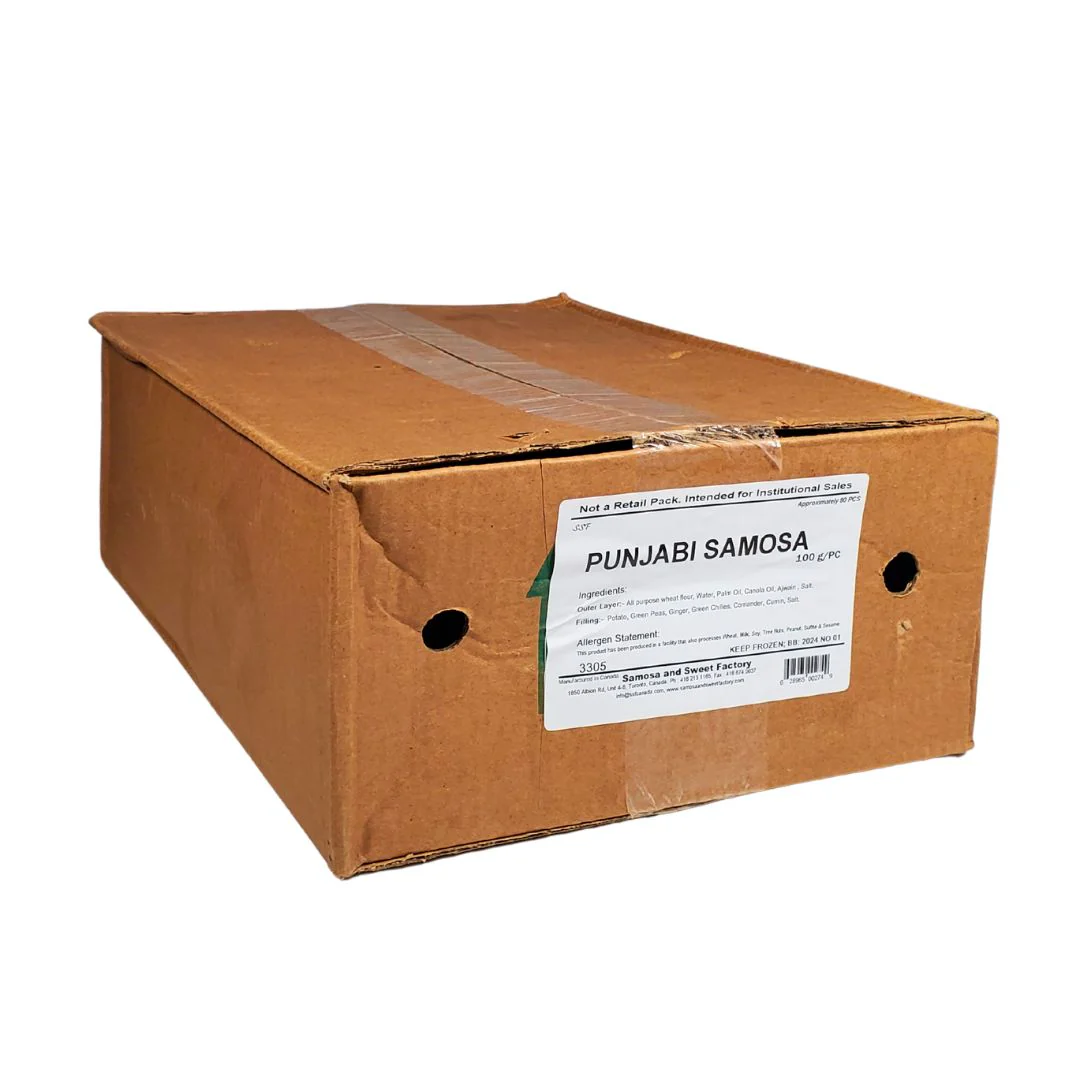
Samosa & Sweet Factory Punjabi Samosas are pre-made frozen appetizers available in packs of 20 pieces or cases containing 80 pieces (4 x 20 count packs). Each samosa weighs approximately 100 grams, providing a substantial portion size for foodservice operations. Available for delivery across GTA.
Common Commercial Applications
Restaurants, catering operations, retail food businesses, and institutional kitchens use pre-made frozen samosas to offer authentic South Asian appetizers without extensive on-site preparation. The frozen format provides convenience for operations with varying demand levels.
Typical users include:
- Indian and South Asian restaurants offering appetizer menus
- Cafes and quick-service establishments with snack offerings
- Catering companies handling events requiring diverse appetizer options
- Food trucks and mobile vendors with limited prep space
- Hotel banquet and event operations
- Institutional cafeterias in corporate, hospital, or educational settings
- Grocery stores and specialty food retailers selling prepared frozen foods
- Party supply and event planning businesses
- Airport and stadium food concessions
- Multi-cuisine restaurants featuring international menu items
Product Specifications and Characteristics
- Weight per piece: Approximately 100 grams
- Pack count: 20 samosas per pack
- Case count: 80 samosas (4 packs of 20)
- Product state: Frozen, ready to cook
- Storage: Requires freezer storage at 0°F (-18°C) or below
The 100g size represents a hearty appetizer portion suitable for individual serving or sharing.
Preparation Methods
Frozen samosas can be prepared using multiple cooking methods depending on equipment availability and service volume:
Deep frying:
- Heat oil to 350°F (175°C)
- Fry frozen samosas for approximately 8-12 minutes
- Cook until golden brown and heated through
- Drain on paper towels before serving
- Most common method for crispy exterior texture
Oven baking:
- Preheat oven to 375-400°F (190-200°C)
- Place frozen samosas on baking sheet
- Brush with oil for browning
- Bake for 25-35 minutes, turning halfway through
- Results in lighter texture compared to frying
Air frying:
- Set air fryer to 350-375°F (175-190°C)
- Lightly brush samosas with oil
- Cook for 12-18 minutes, turning once
- Provides crispy texture with less oil
Cooking times and temperatures may vary based on equipment and desired results. Always verify internal temperature reaches safe levels for hot holding and service.
Storage and Handling
Proper storage maintains product quality and food safety:
- Freezer storage: Maintain at 0°F (-18°C) or colder
- Shelf life: Check packaging for manufacturer's best-by date
- First-in, first-out rotation: Use older inventory first
- Package integrity: Keep frozen in original packaging until ready to use
- Avoid refreezing: Once thawed, do not refreeze
- Temperature monitoring: Regular freezer temperature checks prevent quality loss
- Storage organization: Stack boxes carefully to prevent crushing
Thawing considerations: Product can be cooked directly from frozen state. If thawing is necessary for specific applications, thaw in refrigeration, not at room temperature.
Operational Considerations for Commercial Buyers
Businesses purchasing frozen samosas in bulk should account for several practical factors:
Inventory planning: Calculate needs based on menu offerings, expected demand, and freezer capacity
Prep time reduction: Frozen samosas eliminate preparation steps including dough making, filling preparation, and hand-forming
Labor cost management: Reduces skilled labor requirements compared to making samosas from scratch
Portion control: Pre-portioned 100g pieces simplify serving sizes and cost calculations
Menu flexibility: Stock frozen inventory to accommodate fluctuating demand without waste
Cooking capacity: Ensure fryer, oven, or air fryer capacity meets service volume needs
Holding time: Determine how long cooked samosas maintain quality in hot holding units
Serving suggestions: Consider accompaniments such as chutneys, sauces, or garnishes
Pack Size and Case Quantity Considerations
20-count pack:
- Suitable for smaller operations or testing menu additions
- Easier to rotate through inventory
- Fits in standard residential or small commercial freezers
- Allows for variety in frozen appetizer offerings
Case of 80 (4 x 20):
- Cost efficiency through bulk purchasing
- Suitable for high-volume operations
- Reduces reorder frequency
- Requires adequate freezer storage space
- Appropriate for catering events or banquet service
Menu Integration and Service Applications
Punjabi samosas fit various service formats:
Appetizer service:
- Individual starter plate (1-2 pieces per serving)
- Shared appetizer for tables (3-4 pieces)
- Party platters and catering trays
Combo meals:
- Paired with curry dishes
- Part of combination plates
- Lunch specials and value meals
Snack service:
- Grab-and-go format
- Food court offerings
- Event and stadium concessions
Catering applications:
- Cocktail hour passed appetizers
- Buffet hot appetizer stations
- Boxed meal components
- Event packages and platters
Frequently Asked Questions
1. Can samosas be reheated after cooking?
Yes, cooked samosas can be reheated. Oven or air fryer reheating typically maintains texture better than microwave. Quality is optimal when served fresh, but reheating is possible for operational needs.
2. How long do cooked samosas stay fresh in hot holding?
Hot holding times vary by equipment and temperature. Most operations aim to serve within 1-2 hours for quality. Monitor texture and temperature according to food safety guidelines.
3. Can I cook samosas from frozen, or must they be thawed first?
Samosas are designed to cook from frozen state. Thawing is not required and may affect texture. Cooking from frozen is the recommended method.
4. What dipping sauces pair well with samosas?
Traditional accompaniments include mint chutney, tamarind chutney, and cilantro chutney. Some operations also serve with sweet chili sauce, yogurt-based raitas, or other complementary condiments.
5. How many samosas should I serve per person?
Serving size depends on context. As an appetizer, 1-2 samosas per person is typical. For events with multiple appetizers, adjust quantities accordingly. The 100g size is substantial for a single-piece serving.
6. What is the vegetarian/vegan status of these samosas?
While traditional Punjabi samosas typically contain vegetable fillings, verify specific ingredients with the manufacturer regarding any dairy, ghee, or other animal products in the pastry or filling.
7. How should I price samosas on my menu?
Pricing depends on your cost per unit, preparation expenses, market positioning, and local competition. Calculate your total cost including cooking oil, accompaniments, and labor to determine appropriate pricing.
8. Can samosas be partially cooked and finished later?
Par-cooking is possible but not typically recommended. For best results, cook fully and hold hot for service, or cook to order from frozen state depending on service model.
9. What causes samosas to burst or leak during cooking?
Oil temperature that's too high, overcrowding in fryer, or rough handling can cause bursting. Maintain proper oil temperature and handle carefully during cooking process.
10. How much freezer space do I need for a case?
A case of 80 samosas (4 x 20 count) requires approximately 1-1.5 cubic feet of freezer space depending on packaging configuration. Plan storage accordingly.
Businesses purchasing Samosa & Sweet Factory Punjabi Samosas should evaluate typical service volume, freezer storage capacity, and cooking equipment capabilities. The frozen format works for operations ranging from small cafes to large institutional kitchens, providing flexibility in inventory management based on actual demand. Establishing proper storage protocols, cooking procedures, and holding time standards helps maintain product quality and operational efficiency across Canadian foodservice operations.
Sweet and Samosa Factory - Punjabi Samosa 100g 20ct | Delivery in GTA
Samosa & Sweet Factory Punjabi Samosas are pre-made frozen appetizers available in packs of 20 pieces or cases containing 80 pieces (4 x 20 count packs). Each samosa weighs approximately 100 grams, providing a substantial portion size for foodservice operations. Available for delivery across GTA.
Common Commercial Applications
Restaurants, catering operations, retail food businesses, and institutional kitchens use pre-made frozen samosas to offer authentic South Asian appetizers without extensive on-site preparation. The frozen format provides convenience for operations with varying demand levels.
Typical users include:
- Indian and South Asian restaurants offering appetizer menus
- Cafes and quick-service establishments with snack offerings
- Catering companies handling events requiring diverse appetizer options
- Food trucks and mobile vendors with limited prep space
- Hotel banquet and event operations
- Institutional cafeterias in corporate, hospital, or educational settings
- Grocery stores and specialty food retailers selling prepared frozen foods
- Party supply and event planning businesses
- Airport and stadium food concessions
- Multi-cuisine restaurants featuring international menu items
Product Specifications and Characteristics
- Weight per piece: Approximately 100 grams
- Pack count: 20 samosas per pack
- Case count: 80 samosas (4 packs of 20)
- Product state: Frozen, ready to cook
- Storage: Requires freezer storage at 0°F (-18°C) or below
The 100g size represents a hearty appetizer portion suitable for individual serving or sharing.
Preparation Methods
Frozen samosas can be prepared using multiple cooking methods depending on equipment availability and service volume:
Deep frying:
- Heat oil to 350°F (175°C)
- Fry frozen samosas for approximately 8-12 minutes
- Cook until golden brown and heated through
- Drain on paper towels before serving
- Most common method for crispy exterior texture
Oven baking:
- Preheat oven to 375-400°F (190-200°C)
- Place frozen samosas on baking sheet
- Brush with oil for browning
- Bake for 25-35 minutes, turning halfway through
- Results in lighter texture compared to frying
Air frying:
- Set air fryer to 350-375°F (175-190°C)
- Lightly brush samosas with oil
- Cook for 12-18 minutes, turning once
- Provides crispy texture with less oil
Cooking times and temperatures may vary based on equipment and desired results. Always verify internal temperature reaches safe levels for hot holding and service.
Storage and Handling
Proper storage maintains product quality and food safety:
- Freezer storage: Maintain at 0°F (-18°C) or colder
- Shelf life: Check packaging for manufacturer's best-by date
- First-in, first-out rotation: Use older inventory first
- Package integrity: Keep frozen in original packaging until ready to use
- Avoid refreezing: Once thawed, do not refreeze
- Temperature monitoring: Regular freezer temperature checks prevent quality loss
- Storage organization: Stack boxes carefully to prevent crushing
Thawing considerations: Product can be cooked directly from frozen state. If thawing is necessary for specific applications, thaw in refrigeration, not at room temperature.
Operational Considerations for Commercial Buyers
Businesses purchasing frozen samosas in bulk should account for several practical factors:
Inventory planning: Calculate needs based on menu offerings, expected demand, and freezer capacity
Prep time reduction: Frozen samosas eliminate preparation steps including dough making, filling preparation, and hand-forming
Labor cost management: Reduces skilled labor requirements compared to making samosas from scratch
Portion control: Pre-portioned 100g pieces simplify serving sizes and cost calculations
Menu flexibility: Stock frozen inventory to accommodate fluctuating demand without waste
Cooking capacity: Ensure fryer, oven, or air fryer capacity meets service volume needs
Holding time: Determine how long cooked samosas maintain quality in hot holding units
Serving suggestions: Consider accompaniments such as chutneys, sauces, or garnishes
Pack Size and Case Quantity Considerations
20-count pack:
- Suitable for smaller operations or testing menu additions
- Easier to rotate through inventory
- Fits in standard residential or small commercial freezers
- Allows for variety in frozen appetizer offerings
Case of 80 (4 x 20):
- Cost efficiency through bulk purchasing
- Suitable for high-volume operations
- Reduces reorder frequency
- Requires adequate freezer storage space
- Appropriate for catering events or banquet service
Menu Integration and Service Applications
Punjabi samosas fit various service formats:
Appetizer service:
- Individual starter plate (1-2 pieces per serving)
- Shared appetizer for tables (3-4 pieces)
- Party platters and catering trays
Combo meals:
- Paired with curry dishes
- Part of combination plates
- Lunch specials and value meals
Snack service:
- Grab-and-go format
- Food court offerings
- Event and stadium concessions
Catering applications:
- Cocktail hour passed appetizers
- Buffet hot appetizer stations
- Boxed meal components
- Event packages and platters
Frequently Asked Questions
1. Can samosas be reheated after cooking?
Yes, cooked samosas can be reheated. Oven or air fryer reheating typically maintains texture better than microwave. Quality is optimal when served fresh, but reheating is possible for operational needs.
2. How long do cooked samosas stay fresh in hot holding?
Hot holding times vary by equipment and temperature. Most operations aim to serve within 1-2 hours for quality. Monitor texture and temperature according to food safety guidelines.
3. Can I cook samosas from frozen, or must they be thawed first?
Samosas are designed to cook from frozen state. Thawing is not required and may affect texture. Cooking from frozen is the recommended method.
4. What dipping sauces pair well with samosas?
Traditional accompaniments include mint chutney, tamarind chutney, and cilantro chutney. Some operations also serve with sweet chili sauce, yogurt-based raitas, or other complementary condiments.
5. How many samosas should I serve per person?
Serving size depends on context. As an appetizer, 1-2 samosas per person is typical. For events with multiple appetizers, adjust quantities accordingly. The 100g size is substantial for a single-piece serving.
6. What is the vegetarian/vegan status of these samosas?
While traditional Punjabi samosas typically contain vegetable fillings, verify specific ingredients with the manufacturer regarding any dairy, ghee, or other animal products in the pastry or filling.
7. How should I price samosas on my menu?
Pricing depends on your cost per unit, preparation expenses, market positioning, and local competition. Calculate your total cost including cooking oil, accompaniments, and labor to determine appropriate pricing.
8. Can samosas be partially cooked and finished later?
Par-cooking is possible but not typically recommended. For best results, cook fully and hold hot for service, or cook to order from frozen state depending on service model.
9. What causes samosas to burst or leak during cooking?
Oil temperature that's too high, overcrowding in fryer, or rough handling can cause bursting. Maintain proper oil temperature and handle carefully during cooking process.
10. How much freezer space do I need for a case?
A case of 80 samosas (4 x 20 count) requires approximately 1-1.5 cubic feet of freezer space depending on packaging configuration. Plan storage accordingly.
Businesses purchasing Samosa & Sweet Factory Punjabi Samosas should evaluate typical service volume, freezer storage capacity, and cooking equipment capabilities. The frozen format works for operations ranging from small cafes to large institutional kitchens, providing flexibility in inventory management based on actual demand. Establishing proper storage protocols, cooking procedures, and holding time standards helps maintain product quality and operational efficiency across Canadian foodservice operations.
Description
Sweet and Samosa Factory - Punjabi Samosa 100g 20ct | Delivery in GTA
Samosa & Sweet Factory Punjabi Samosas are pre-made frozen appetizers available in packs of 20 pieces or cases containing 80 pieces (4 x 20 count packs). Each samosa weighs approximately 100 grams, providing a substantial portion size for foodservice operations. Available for delivery across GTA.
Common Commercial Applications
Restaurants, catering operations, retail food businesses, and institutional kitchens use pre-made frozen samosas to offer authentic South Asian appetizers without extensive on-site preparation. The frozen format provides convenience for operations with varying demand levels.
Typical users include:
- Indian and South Asian restaurants offering appetizer menus
- Cafes and quick-service establishments with snack offerings
- Catering companies handling events requiring diverse appetizer options
- Food trucks and mobile vendors with limited prep space
- Hotel banquet and event operations
- Institutional cafeterias in corporate, hospital, or educational settings
- Grocery stores and specialty food retailers selling prepared frozen foods
- Party supply and event planning businesses
- Airport and stadium food concessions
- Multi-cuisine restaurants featuring international menu items
Product Specifications and Characteristics
- Weight per piece: Approximately 100 grams
- Pack count: 20 samosas per pack
- Case count: 80 samosas (4 packs of 20)
- Product state: Frozen, ready to cook
- Storage: Requires freezer storage at 0°F (-18°C) or below
The 100g size represents a hearty appetizer portion suitable for individual serving or sharing.
Preparation Methods
Frozen samosas can be prepared using multiple cooking methods depending on equipment availability and service volume:
Deep frying:
- Heat oil to 350°F (175°C)
- Fry frozen samosas for approximately 8-12 minutes
- Cook until golden brown and heated through
- Drain on paper towels before serving
- Most common method for crispy exterior texture
Oven baking:
- Preheat oven to 375-400°F (190-200°C)
- Place frozen samosas on baking sheet
- Brush with oil for browning
- Bake for 25-35 minutes, turning halfway through
- Results in lighter texture compared to frying
Air frying:
- Set air fryer to 350-375°F (175-190°C)
- Lightly brush samosas with oil
- Cook for 12-18 minutes, turning once
- Provides crispy texture with less oil
Cooking times and temperatures may vary based on equipment and desired results. Always verify internal temperature reaches safe levels for hot holding and service.
Storage and Handling
Proper storage maintains product quality and food safety:
- Freezer storage: Maintain at 0°F (-18°C) or colder
- Shelf life: Check packaging for manufacturer's best-by date
- First-in, first-out rotation: Use older inventory first
- Package integrity: Keep frozen in original packaging until ready to use
- Avoid refreezing: Once thawed, do not refreeze
- Temperature monitoring: Regular freezer temperature checks prevent quality loss
- Storage organization: Stack boxes carefully to prevent crushing
Thawing considerations: Product can be cooked directly from frozen state. If thawing is necessary for specific applications, thaw in refrigeration, not at room temperature.
Operational Considerations for Commercial Buyers
Businesses purchasing frozen samosas in bulk should account for several practical factors:
Inventory planning: Calculate needs based on menu offerings, expected demand, and freezer capacity
Prep time reduction: Frozen samosas eliminate preparation steps including dough making, filling preparation, and hand-forming
Labor cost management: Reduces skilled labor requirements compared to making samosas from scratch
Portion control: Pre-portioned 100g pieces simplify serving sizes and cost calculations
Menu flexibility: Stock frozen inventory to accommodate fluctuating demand without waste
Cooking capacity: Ensure fryer, oven, or air fryer capacity meets service volume needs
Holding time: Determine how long cooked samosas maintain quality in hot holding units
Serving suggestions: Consider accompaniments such as chutneys, sauces, or garnishes
Pack Size and Case Quantity Considerations
20-count pack:
- Suitable for smaller operations or testing menu additions
- Easier to rotate through inventory
- Fits in standard residential or small commercial freezers
- Allows for variety in frozen appetizer offerings
Case of 80 (4 x 20):
- Cost efficiency through bulk purchasing
- Suitable for high-volume operations
- Reduces reorder frequency
- Requires adequate freezer storage space
- Appropriate for catering events or banquet service
Menu Integration and Service Applications
Punjabi samosas fit various service formats:
Appetizer service:
- Individual starter plate (1-2 pieces per serving)
- Shared appetizer for tables (3-4 pieces)
- Party platters and catering trays
Combo meals:
- Paired with curry dishes
- Part of combination plates
- Lunch specials and value meals
Snack service:
- Grab-and-go format
- Food court offerings
- Event and stadium concessions
Catering applications:
- Cocktail hour passed appetizers
- Buffet hot appetizer stations
- Boxed meal components
- Event packages and platters
Frequently Asked Questions
1. Can samosas be reheated after cooking?
Yes, cooked samosas can be reheated. Oven or air fryer reheating typically maintains texture better than microwave. Quality is optimal when served fresh, but reheating is possible for operational needs.
2. How long do cooked samosas stay fresh in hot holding?
Hot holding times vary by equipment and temperature. Most operations aim to serve within 1-2 hours for quality. Monitor texture and temperature according to food safety guidelines.
3. Can I cook samosas from frozen, or must they be thawed first?
Samosas are designed to cook from frozen state. Thawing is not required and may affect texture. Cooking from frozen is the recommended method.
4. What dipping sauces pair well with samosas?
Traditional accompaniments include mint chutney, tamarind chutney, and cilantro chutney. Some operations also serve with sweet chili sauce, yogurt-based raitas, or other complementary condiments.
5. How many samosas should I serve per person?
Serving size depends on context. As an appetizer, 1-2 samosas per person is typical. For events with multiple appetizers, adjust quantities accordingly. The 100g size is substantial for a single-piece serving.
6. What is the vegetarian/vegan status of these samosas?
While traditional Punjabi samosas typically contain vegetable fillings, verify specific ingredients with the manufacturer regarding any dairy, ghee, or other animal products in the pastry or filling.
7. How should I price samosas on my menu?
Pricing depends on your cost per unit, preparation expenses, market positioning, and local competition. Calculate your total cost including cooking oil, accompaniments, and labor to determine appropriate pricing.
8. Can samosas be partially cooked and finished later?
Par-cooking is possible but not typically recommended. For best results, cook fully and hold hot for service, or cook to order from frozen state depending on service model.
9. What causes samosas to burst or leak during cooking?
Oil temperature that's too high, overcrowding in fryer, or rough handling can cause bursting. Maintain proper oil temperature and handle carefully during cooking process.
10. How much freezer space do I need for a case?
A case of 80 samosas (4 x 20 count) requires approximately 1-1.5 cubic feet of freezer space depending on packaging configuration. Plan storage accordingly.
Businesses purchasing Samosa & Sweet Factory Punjabi Samosas should evaluate typical service volume, freezer storage capacity, and cooking equipment capabilities. The frozen format works for operations ranging from small cafes to large institutional kitchens, providing flexibility in inventory management based on actual demand. Establishing proper storage protocols, cooking procedures, and holding time standards helps maintain product quality and operational efficiency across Canadian foodservice operations.