Nupak - Pinto Beans
Bulk Pinto Beans 10 lb at Wholesale Near You | Delivered Across Canada
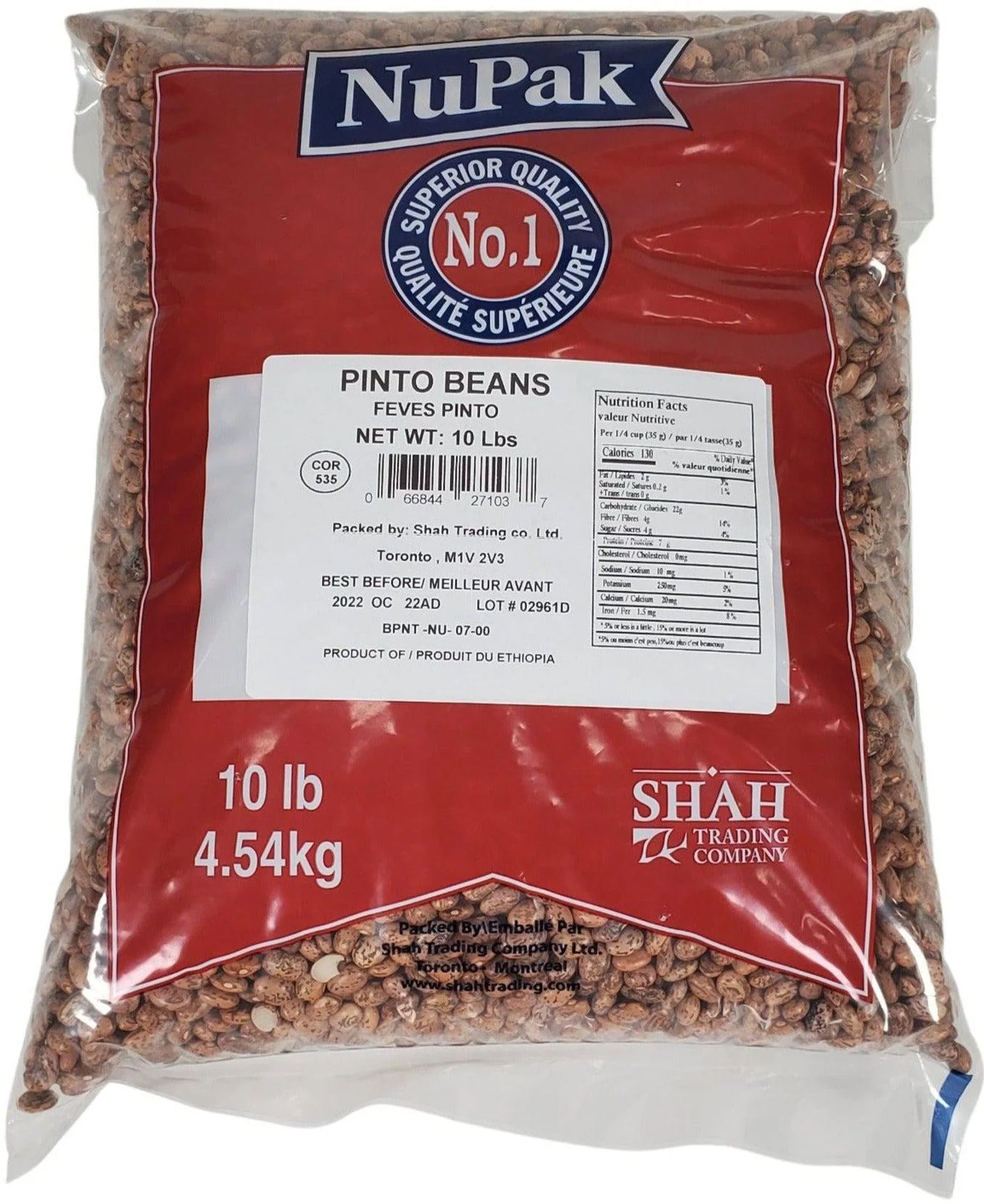
Nupak pinto beans are dried legumes available in 10 lb bags for commercial foodservice operations. These mottled beige and brown beans are commonly used across multiple cuisines and provide a protein-rich ingredient for diverse menu applications. Available for delivery across Canada.
Common Commercial Applications
Restaurants, catering operations, institutional kitchens, and food service establishments use pinto beans in both traditional and contemporary dishes. The dried format allows for long-term storage and preparation flexibility.
Typical users include:
- Mexican and Latin American restaurants preparing refried beans, burritos, and enchiladas
- Tex-Mex establishments creating chili con carne and bean-based sides
- Cafeterias and institutional kitchens in schools, hospitals, and corporate settings
- Catering companies handling large-batch preparations for events
- Food trucks and street food vendors offering bean-based menu items
- Vegetarian and vegan restaurants incorporating plant-based proteins
- Indian and Pakistani restaurants using pinto beans (rajma) in curry preparations
- Cafes and fast-casual concepts featuring bowls and grain-based offerings
- Wholesale food distributors supplying ingredients to multiple operations
Product Characteristics and Nutritional Profile
Pinto beans (Phaseolus vulgaris) are speckled kidney-shaped legumes with distinctive mottled coloring that fades to solid pink-brown when cooked. The name "pinto" derives from the Spanish word for "painted" due to their appearance.
Physical characteristics:
- Size: Medium-sized bean, approximately 1/2 inch in length
- Color: Beige background with brown speckles when dry; solid pink-brown when cooked
- Texture when cooked: Creamy interior with tender skin
- Moisture content: Dried beans contain minimal moisture for extended shelf life
Nutritional composition (uncooked): Pinto beans are recognized as a source of protein, fiber, and various minerals. Specific nutritional values vary based on growing conditions and processing.
Culinary Uses in Commercial Kitchens
Pinto beans serve multiple functions across diverse cooking applications:
Mexican and Latin American cuisine:
- Refried beans (frijoles refritos)
- Whole beans served as side dishes
- Burrito and enchilada fillings
- Bean and cheese quesadilla components
- Taco fillings and toppings
- Nachos and loaded fries bases
Tex-Mex and American cuisine:
- Chili con carne preparations
- Bean soups and stews
- BBQ baked beans
- Three-bean salad components
- Southwestern-style bowls
South Asian cuisine:
- Rajma curry preparations
- Spiced bean dishes
- Dal-style preparations
- Rice and bean combinations
Contemporary and fusion applications:
- Protein component in grain bowls
- Plant-based burger patties
- Bean dips and spreads
- Salad toppings and mix-ins
- Soup and chowder bases
Preparation Methods and Cooking Considerations
Dried pinto beans require preparation before cooking. Standard commercial kitchen procedures include:
Sorting and rinsing:
- Remove any debris, stones, or damaged beans
- Rinse thoroughly under cold water
Soaking methods:
- Overnight soak: Cover beans with water and soak 8-12 hours
- Quick soak: Boil beans for 2-3 minutes, then let stand covered for 1 hour
- Some operations skip soaking, though cooking time increases
Cooking process:
- Drain soaking liquid and add fresh water
- Simmer 1-2 hours until tender (time varies with soaking method and bean age)
- Add salt and seasonings toward end of cooking to prevent tough skins
- Test for doneness—beans should be tender throughout
Yield considerations:
- Dried beans typically double to triple in volume when cooked
- 1 lb dried pinto beans yields approximately 6-7 cups cooked beans
- 10 lb bag yields approximately 60-70 cups cooked beans
Storage and Shelf Life
Proper storage extends the usable life of dried pinto beans:
- Store in cool, dry locations away from direct sunlight
- Keep in airtight jars, containers or sealed original packaging
- Maintain temperatures between 50-70°F when possible
- Avoid exposure to moisture and humidity
- Implement first-in, first-out rotation practices
- Elevated storage prevents ground moisture contact
Dried beans can maintain quality for extended periods when properly stored, though cooking time may increase as beans age. Older beans may require longer soaking and cooking periods.
Operational Considerations for Commercial Buyers
Businesses using pinto beans in volume should account for several practical factors:
Batch cooking: Many operations cook beans in large batches and refrigerate or freeze portions for service
Advance preparation: Soaking and cooking time requires planning ahead for service needs
Equipment requirements: Large stock pots, steam kettles, or pressure cookers for volume preparation
Flavor development: Beans absorb flavors well; cooking with aromatics, spices, and seasonings enhances final product
Texture control: Monitor cooking to achieve desired consistency—firm for salads, softer for refried beans
Food safety protocols: Follow proper cooling, storage, and reheating procedures for cooked beans
Cost management: Track yield and usage to calculate accurate per-serving costs
Quality Indicators for Commercial Grade Pinto Beans
When evaluating pinto beans for commercial purchase, buyers typically assess:
- Uniform size: Consistent bean size ensures even cooking
- Clean appearance: Minimal debris, stones, or broken beans
- Color consistency: Beans with consistent coloring suggest uniform quality
- Moisture content: Properly dried beans should not feel damp or sticky
- Minimal breakage: Intact beans indicate careful handling and processing
- Fresh smell: Beans should have neutral or slightly earthy smell, not musty odors
Visual inspection upon delivery helps verify product meets operational standards.
Pinto Beans vs. Other Bean Varieties
Understanding distinctions between bean types helps in selecting appropriate products:
Pinto beans:
- Creamy texture when cooked
- Mild, earthy flavor
- Traditional for refried beans and Mexican cuisine
- Medium size with distinctive speckled appearance
- Firmer texture
- Slightly sweeter, earthier flavor
- Common in Cuban, Brazilian, and Central American cuisines
- Darker color impacts dish appearance
- Larger size
- Firmer texture that holds shape well
- Traditional for chili and Caribbean dishes
- Darker red color
Many operations stock multiple bean varieties to accommodate different menu items and regional preferences.
Frequently Asked Questions
Do pinto beans need to be soaked before cooking?
Soaking is not mandatory but reduces cooking time and can improve digestibility. Many commercial kitchens soak beans overnight for efficiency. Quick-soak methods offer alternatives when time is limited.
How long do dried pinto beans last in storage?
When stored properly in cool, dry conditions, dried beans can maintain quality for extended periods. Older beans remain safe to consume but may require longer cooking times. Regular rotation helps ensure optimal cooking performance.
Can I cook pinto beans without soaking?
Yes, though cooking time increases significantly—often 2-3 hours or more. Pressure cookers can reduce unsoaked cooking time. Many commercial operations prefer soaking for time efficiency.
What causes beans to remain hard after cooking?
Hard beans may result from old age, hard water, acidic ingredients added too early, or insufficient cooking time. Using fresh beans, soft water, and adding acidic ingredients after beans soften helps prevent this issue.
How should I store cooked pinto beans?
Refrigerate cooked beans in shallow containers within 2 hours of cooking. Use within 3-4 days. Cooked beans can also be frozen for extended storage. Label and date all containers for inventory management.
What is the protein content of pinto beans?
Protein content varies but dried pinto beans typically contain approximately 20-25% protein by weight. Exact values depend on growing conditions and specific varieties. Nutritional information varies by source.
Can pinto beans be used interchangeably with other bean varieties?
Substitution depends on the dish. Pinto beans work well in most recipes calling for kidney or red beans, though texture and appearance differ. Recipe testing helps determine if substitution meets quality standards.
Why do my beans foam when cooking?
Foam results from proteins and starches releasing during cooking. Skimming foam is optional—it doesn't affect food safety but may improve appearance of cooking liquid. Some operations skim, others don't.
How many servings does 10 lbs of dried pinto beans provide?
Yield depends on serving size. If using 1/2 cup cooked beans per serving, 10 lbs dried beans (yielding approximately 60-70 cups cooked) provides roughly 120-140 servings. Calculate based on specific portions for accurate planning.
Are pinto beans suitable for customers with dietary restrictions?
Pinto beans are naturally gluten-free, vegan, and vegetarian. However, verify processing facilities for potential cross-contamination if allergen concerns exist. Beans are legumes, which some individuals avoid.
Businesses purchasing Nupak pinto beans in bulk should evaluate typical usage patterns, storage capacity, and preparation workflows. The 10 lb bag format works for operations with regular bean usage across menu items while allowing for manageable inventory rotation. Establishing cooking protocols, batch preparation schedules, and proper storage procedures helps maintain product quality and operational efficiency across Canadian foodservice operations
Bulk Pinto Beans 10 lb at Wholesale Near You | Delivered Across Canada
Nupak pinto beans are dried legumes available in 10 lb bags for commercial foodservice operations. These mottled beige and brown beans are commonly used across multiple cuisines and provide a protein-rich ingredient for diverse menu applications. Available for delivery across Canada.
Common Commercial Applications
Restaurants, catering operations, institutional kitchens, and food service establishments use pinto beans in both traditional and contemporary dishes. The dried format allows for long-term storage and preparation flexibility.
Typical users include:
- Mexican and Latin American restaurants preparing refried beans, burritos, and enchiladas
- Tex-Mex establishments creating chili con carne and bean-based sides
- Cafeterias and institutional kitchens in schools, hospitals, and corporate settings
- Catering companies handling large-batch preparations for events
- Food trucks and street food vendors offering bean-based menu items
- Vegetarian and vegan restaurants incorporating plant-based proteins
- Indian and Pakistani restaurants using pinto beans (rajma) in curry preparations
- Cafes and fast-casual concepts featuring bowls and grain-based offerings
- Wholesale food distributors supplying ingredients to multiple operations
Product Characteristics and Nutritional Profile
Pinto beans (Phaseolus vulgaris) are speckled kidney-shaped legumes with distinctive mottled coloring that fades to solid pink-brown when cooked. The name "pinto" derives from the Spanish word for "painted" due to their appearance.
Physical characteristics:
- Size: Medium-sized bean, approximately 1/2 inch in length
- Color: Beige background with brown speckles when dry; solid pink-brown when cooked
- Texture when cooked: Creamy interior with tender skin
- Moisture content: Dried beans contain minimal moisture for extended shelf life
Nutritional composition (uncooked): Pinto beans are recognized as a source of protein, fiber, and various minerals. Specific nutritional values vary based on growing conditions and processing.
Culinary Uses in Commercial Kitchens
Pinto beans serve multiple functions across diverse cooking applications:
Mexican and Latin American cuisine:
- Refried beans (frijoles refritos)
- Whole beans served as side dishes
- Burrito and enchilada fillings
- Bean and cheese quesadilla components
- Taco fillings and toppings
- Nachos and loaded fries bases
Tex-Mex and American cuisine:
- Chili con carne preparations
- Bean soups and stews
- BBQ baked beans
- Three-bean salad components
- Southwestern-style bowls
South Asian cuisine:
- Rajma curry preparations
- Spiced bean dishes
- Dal-style preparations
- Rice and bean combinations
Contemporary and fusion applications:
- Protein component in grain bowls
- Plant-based burger patties
- Bean dips and spreads
- Salad toppings and mix-ins
- Soup and chowder bases
Preparation Methods and Cooking Considerations
Dried pinto beans require preparation before cooking. Standard commercial kitchen procedures include:
Sorting and rinsing:
- Remove any debris, stones, or damaged beans
- Rinse thoroughly under cold water
Soaking methods:
- Overnight soak: Cover beans with water and soak 8-12 hours
- Quick soak: Boil beans for 2-3 minutes, then let stand covered for 1 hour
- Some operations skip soaking, though cooking time increases
Cooking process:
- Drain soaking liquid and add fresh water
- Simmer 1-2 hours until tender (time varies with soaking method and bean age)
- Add salt and seasonings toward end of cooking to prevent tough skins
- Test for doneness—beans should be tender throughout
Yield considerations:
- Dried beans typically double to triple in volume when cooked
- 1 lb dried pinto beans yields approximately 6-7 cups cooked beans
- 10 lb bag yields approximately 60-70 cups cooked beans
Storage and Shelf Life
Proper storage extends the usable life of dried pinto beans:
- Store in cool, dry locations away from direct sunlight
- Keep in airtight jars, containers or sealed original packaging
- Maintain temperatures between 50-70°F when possible
- Avoid exposure to moisture and humidity
- Implement first-in, first-out rotation practices
- Elevated storage prevents ground moisture contact
Dried beans can maintain quality for extended periods when properly stored, though cooking time may increase as beans age. Older beans may require longer soaking and cooking periods.
Operational Considerations for Commercial Buyers
Businesses using pinto beans in volume should account for several practical factors:
Batch cooking: Many operations cook beans in large batches and refrigerate or freeze portions for service
Advance preparation: Soaking and cooking time requires planning ahead for service needs
Equipment requirements: Large stock pots, steam kettles, or pressure cookers for volume preparation
Flavor development: Beans absorb flavors well; cooking with aromatics, spices, and seasonings enhances final product
Texture control: Monitor cooking to achieve desired consistency—firm for salads, softer for refried beans
Food safety protocols: Follow proper cooling, storage, and reheating procedures for cooked beans
Cost management: Track yield and usage to calculate accurate per-serving costs
Quality Indicators for Commercial Grade Pinto Beans
When evaluating pinto beans for commercial purchase, buyers typically assess:
- Uniform size: Consistent bean size ensures even cooking
- Clean appearance: Minimal debris, stones, or broken beans
- Color consistency: Beans with consistent coloring suggest uniform quality
- Moisture content: Properly dried beans should not feel damp or sticky
- Minimal breakage: Intact beans indicate careful handling and processing
- Fresh smell: Beans should have neutral or slightly earthy smell, not musty odors
Visual inspection upon delivery helps verify product meets operational standards.
Pinto Beans vs. Other Bean Varieties
Understanding distinctions between bean types helps in selecting appropriate products:
Pinto beans:
- Creamy texture when cooked
- Mild, earthy flavor
- Traditional for refried beans and Mexican cuisine
- Medium size with distinctive speckled appearance
- Firmer texture
- Slightly sweeter, earthier flavor
- Common in Cuban, Brazilian, and Central American cuisines
- Darker color impacts dish appearance
- Larger size
- Firmer texture that holds shape well
- Traditional for chili and Caribbean dishes
- Darker red color
Many operations stock multiple bean varieties to accommodate different menu items and regional preferences.
Frequently Asked Questions
Do pinto beans need to be soaked before cooking?
Soaking is not mandatory but reduces cooking time and can improve digestibility. Many commercial kitchens soak beans overnight for efficiency. Quick-soak methods offer alternatives when time is limited.
How long do dried pinto beans last in storage?
When stored properly in cool, dry conditions, dried beans can maintain quality for extended periods. Older beans remain safe to consume but may require longer cooking times. Regular rotation helps ensure optimal cooking performance.
Can I cook pinto beans without soaking?
Yes, though cooking time increases significantly—often 2-3 hours or more. Pressure cookers can reduce unsoaked cooking time. Many commercial operations prefer soaking for time efficiency.
What causes beans to remain hard after cooking?
Hard beans may result from old age, hard water, acidic ingredients added too early, or insufficient cooking time. Using fresh beans, soft water, and adding acidic ingredients after beans soften helps prevent this issue.
How should I store cooked pinto beans?
Refrigerate cooked beans in shallow containers within 2 hours of cooking. Use within 3-4 days. Cooked beans can also be frozen for extended storage. Label and date all containers for inventory management.
What is the protein content of pinto beans?
Protein content varies but dried pinto beans typically contain approximately 20-25% protein by weight. Exact values depend on growing conditions and specific varieties. Nutritional information varies by source.
Can pinto beans be used interchangeably with other bean varieties?
Substitution depends on the dish. Pinto beans work well in most recipes calling for kidney or red beans, though texture and appearance differ. Recipe testing helps determine if substitution meets quality standards.
Why do my beans foam when cooking?
Foam results from proteins and starches releasing during cooking. Skimming foam is optional—it doesn't affect food safety but may improve appearance of cooking liquid. Some operations skim, others don't.
How many servings does 10 lbs of dried pinto beans provide?
Yield depends on serving size. If using 1/2 cup cooked beans per serving, 10 lbs dried beans (yielding approximately 60-70 cups cooked) provides roughly 120-140 servings. Calculate based on specific portions for accurate planning.
Are pinto beans suitable for customers with dietary restrictions?
Pinto beans are naturally gluten-free, vegan, and vegetarian. However, verify processing facilities for potential cross-contamination if allergen concerns exist. Beans are legumes, which some individuals avoid.
Businesses purchasing Nupak pinto beans in bulk should evaluate typical usage patterns, storage capacity, and preparation workflows. The 10 lb bag format works for operations with regular bean usage across menu items while allowing for manageable inventory rotation. Establishing cooking protocols, batch preparation schedules, and proper storage procedures helps maintain product quality and operational efficiency across Canadian foodservice operations
Description
Bulk Pinto Beans 10 lb at Wholesale Near You | Delivered Across Canada
Nupak pinto beans are dried legumes available in 10 lb bags for commercial foodservice operations. These mottled beige and brown beans are commonly used across multiple cuisines and provide a protein-rich ingredient for diverse menu applications. Available for delivery across Canada.
Common Commercial Applications
Restaurants, catering operations, institutional kitchens, and food service establishments use pinto beans in both traditional and contemporary dishes. The dried format allows for long-term storage and preparation flexibility.
Typical users include:
- Mexican and Latin American restaurants preparing refried beans, burritos, and enchiladas
- Tex-Mex establishments creating chili con carne and bean-based sides
- Cafeterias and institutional kitchens in schools, hospitals, and corporate settings
- Catering companies handling large-batch preparations for events
- Food trucks and street food vendors offering bean-based menu items
- Vegetarian and vegan restaurants incorporating plant-based proteins
- Indian and Pakistani restaurants using pinto beans (rajma) in curry preparations
- Cafes and fast-casual concepts featuring bowls and grain-based offerings
- Wholesale food distributors supplying ingredients to multiple operations
Product Characteristics and Nutritional Profile
Pinto beans (Phaseolus vulgaris) are speckled kidney-shaped legumes with distinctive mottled coloring that fades to solid pink-brown when cooked. The name "pinto" derives from the Spanish word for "painted" due to their appearance.
Physical characteristics:
- Size: Medium-sized bean, approximately 1/2 inch in length
- Color: Beige background with brown speckles when dry; solid pink-brown when cooked
- Texture when cooked: Creamy interior with tender skin
- Moisture content: Dried beans contain minimal moisture for extended shelf life
Nutritional composition (uncooked): Pinto beans are recognized as a source of protein, fiber, and various minerals. Specific nutritional values vary based on growing conditions and processing.
Culinary Uses in Commercial Kitchens
Pinto beans serve multiple functions across diverse cooking applications:
Mexican and Latin American cuisine:
- Refried beans (frijoles refritos)
- Whole beans served as side dishes
- Burrito and enchilada fillings
- Bean and cheese quesadilla components
- Taco fillings and toppings
- Nachos and loaded fries bases
Tex-Mex and American cuisine:
- Chili con carne preparations
- Bean soups and stews
- BBQ baked beans
- Three-bean salad components
- Southwestern-style bowls
South Asian cuisine:
- Rajma curry preparations
- Spiced bean dishes
- Dal-style preparations
- Rice and bean combinations
Contemporary and fusion applications:
- Protein component in grain bowls
- Plant-based burger patties
- Bean dips and spreads
- Salad toppings and mix-ins
- Soup and chowder bases
Preparation Methods and Cooking Considerations
Dried pinto beans require preparation before cooking. Standard commercial kitchen procedures include:
Sorting and rinsing:
- Remove any debris, stones, or damaged beans
- Rinse thoroughly under cold water
Soaking methods:
- Overnight soak: Cover beans with water and soak 8-12 hours
- Quick soak: Boil beans for 2-3 minutes, then let stand covered for 1 hour
- Some operations skip soaking, though cooking time increases
Cooking process:
- Drain soaking liquid and add fresh water
- Simmer 1-2 hours until tender (time varies with soaking method and bean age)
- Add salt and seasonings toward end of cooking to prevent tough skins
- Test for doneness—beans should be tender throughout
Yield considerations:
- Dried beans typically double to triple in volume when cooked
- 1 lb dried pinto beans yields approximately 6-7 cups cooked beans
- 10 lb bag yields approximately 60-70 cups cooked beans
Storage and Shelf Life
Proper storage extends the usable life of dried pinto beans:
- Store in cool, dry locations away from direct sunlight
- Keep in airtight jars, containers or sealed original packaging
- Maintain temperatures between 50-70°F when possible
- Avoid exposure to moisture and humidity
- Implement first-in, first-out rotation practices
- Elevated storage prevents ground moisture contact
Dried beans can maintain quality for extended periods when properly stored, though cooking time may increase as beans age. Older beans may require longer soaking and cooking periods.
Operational Considerations for Commercial Buyers
Businesses using pinto beans in volume should account for several practical factors:
Batch cooking: Many operations cook beans in large batches and refrigerate or freeze portions for service
Advance preparation: Soaking and cooking time requires planning ahead for service needs
Equipment requirements: Large stock pots, steam kettles, or pressure cookers for volume preparation
Flavor development: Beans absorb flavors well; cooking with aromatics, spices, and seasonings enhances final product
Texture control: Monitor cooking to achieve desired consistency—firm for salads, softer for refried beans
Food safety protocols: Follow proper cooling, storage, and reheating procedures for cooked beans
Cost management: Track yield and usage to calculate accurate per-serving costs
Quality Indicators for Commercial Grade Pinto Beans
When evaluating pinto beans for commercial purchase, buyers typically assess:
- Uniform size: Consistent bean size ensures even cooking
- Clean appearance: Minimal debris, stones, or broken beans
- Color consistency: Beans with consistent coloring suggest uniform quality
- Moisture content: Properly dried beans should not feel damp or sticky
- Minimal breakage: Intact beans indicate careful handling and processing
- Fresh smell: Beans should have neutral or slightly earthy smell, not musty odors
Visual inspection upon delivery helps verify product meets operational standards.
Pinto Beans vs. Other Bean Varieties
Understanding distinctions between bean types helps in selecting appropriate products:
Pinto beans:
- Creamy texture when cooked
- Mild, earthy flavor
- Traditional for refried beans and Mexican cuisine
- Medium size with distinctive speckled appearance
- Firmer texture
- Slightly sweeter, earthier flavor
- Common in Cuban, Brazilian, and Central American cuisines
- Darker color impacts dish appearance
- Larger size
- Firmer texture that holds shape well
- Traditional for chili and Caribbean dishes
- Darker red color
Many operations stock multiple bean varieties to accommodate different menu items and regional preferences.
Frequently Asked Questions
Do pinto beans need to be soaked before cooking?
Soaking is not mandatory but reduces cooking time and can improve digestibility. Many commercial kitchens soak beans overnight for efficiency. Quick-soak methods offer alternatives when time is limited.
How long do dried pinto beans last in storage?
When stored properly in cool, dry conditions, dried beans can maintain quality for extended periods. Older beans remain safe to consume but may require longer cooking times. Regular rotation helps ensure optimal cooking performance.
Can I cook pinto beans without soaking?
Yes, though cooking time increases significantly—often 2-3 hours or more. Pressure cookers can reduce unsoaked cooking time. Many commercial operations prefer soaking for time efficiency.
What causes beans to remain hard after cooking?
Hard beans may result from old age, hard water, acidic ingredients added too early, or insufficient cooking time. Using fresh beans, soft water, and adding acidic ingredients after beans soften helps prevent this issue.
How should I store cooked pinto beans?
Refrigerate cooked beans in shallow containers within 2 hours of cooking. Use within 3-4 days. Cooked beans can also be frozen for extended storage. Label and date all containers for inventory management.
What is the protein content of pinto beans?
Protein content varies but dried pinto beans typically contain approximately 20-25% protein by weight. Exact values depend on growing conditions and specific varieties. Nutritional information varies by source.
Can pinto beans be used interchangeably with other bean varieties?
Substitution depends on the dish. Pinto beans work well in most recipes calling for kidney or red beans, though texture and appearance differ. Recipe testing helps determine if substitution meets quality standards.
Why do my beans foam when cooking?
Foam results from proteins and starches releasing during cooking. Skimming foam is optional—it doesn't affect food safety but may improve appearance of cooking liquid. Some operations skim, others don't.
How many servings does 10 lbs of dried pinto beans provide?
Yield depends on serving size. If using 1/2 cup cooked beans per serving, 10 lbs dried beans (yielding approximately 60-70 cups cooked) provides roughly 120-140 servings. Calculate based on specific portions for accurate planning.
Are pinto beans suitable for customers with dietary restrictions?
Pinto beans are naturally gluten-free, vegan, and vegetarian. However, verify processing facilities for potential cross-contamination if allergen concerns exist. Beans are legumes, which some individuals avoid.
Businesses purchasing Nupak pinto beans in bulk should evaluate typical usage patterns, storage capacity, and preparation workflows. The 10 lb bag format works for operations with regular bean usage across menu items while allowing for manageable inventory rotation. Establishing cooking protocols, batch preparation schedules, and proper storage procedures helps maintain product quality and operational efficiency across Canadian foodservice operations