Maggi - Seasoning - Liquid
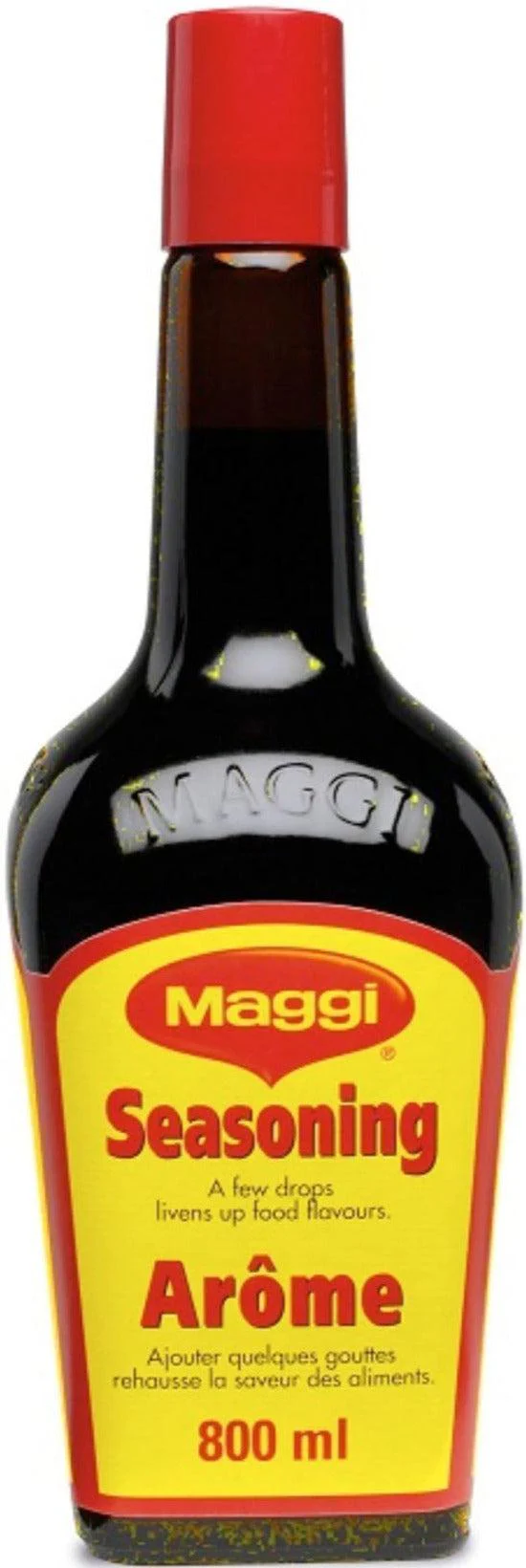
Maggi Liquid Seasoning is a concentrated, savoury seasoning sauce used extensively across professional kitchens, foodservice operations, and food manufacturing environments worldwide. Available in 800 ml individual bottles and in a case format of 6 x 800 ml, this product is a staple condiment and cooking ingredient in commercial settings where depth of flavour and consistent seasoning are operational priorities.
Maggi food seasoning has been a recognised ingredient in global culinary traditions for well over a century, with widespread use across European, Asian, Latin American, and African cuisines. Its deep umami profile makes it a versatile addition to a broad range of savoury applications in both cooking and tableside use.
What Is Maggi Liquid Seasoning?
Maggi seasoning sauce is a dark, concentrated liquid condiment produced from hydrolysed vegetable protein, giving it a rich, savoury flavour profile comparable in function to soy sauce or Worcestershire sauce, though distinct in taste. It is used in small quantities to enhance the overall flavour of dishes rather than as a primary sauce or base.
The product has a deeply ingrained presence in foodservice and home cooking across multiple continents, and is frequently referenced in recipes from Mexican, Vietnamese, German, Filipino, and West African culinary traditions, among others. In commercial kitchen settings, it functions as a seasoning tool that adds complexity without significantly altering the colour or texture of a finished dish when used in measured amounts.
Common Commercial Applications
Maggi liquid seasoning is used across a wide variety of professional food environments, including:
- Restaurants and commercial kitchens using it as a seasoning agent in soups, stews, sauces, marinades, and braised dishes
- Catering companies incorporating it into large-batch savoury preparations where consistent flavour depth is required
- Cafés and quick-service operations using it in eggs, sandwiches, wraps, and savoury breakfast items
- Food trucks and carts where a single versatile seasoning can serve multiple menu items
- Hotels and hospitality kitchens managing diverse, internationally influenced menus
- Food manufacturers and meal kit companies using Maggi seasoning sauce as a flavour component in prepared sauces, spice blends, and ready-to-cook products
- Retail and specialty grocery operations stocking it as a consumer condiment with strong brand recognition
- Institutional kitchens in healthcare, education, and corporate food programs where flavour consistency across large volumes is a practical concern
Product Characteristics
| Feature | Detail |
|---|---|
| Product Name | Maggi Liquid Seasoning Sauce |
| Format | Dark concentrated liquid |
| Individual Unit Size | 800 ml |
| Case Format | 6 x 800 ml |
| Flavour Profile | Savoury, umami-forward |
| Primary Use | Cooking seasoning and condiment |
| Brand | Maggi (Nestlé) |
The 800 ml bottle format is practical for high-turnover commercial kitchens where a smaller format would require frequent restocking. The case of 6 x 800 ml supports bulk procurement for operations with consistent weekly usage, reducing per-unit cost and order frequency.
How Maggi Seasoning Sauce Is Typically Used in Professional Kitchens
Maggi food seasoning functions as a finishing agent, cooking additive, and tableside condiment depending on the operation. Common preparation uses include:
- Soups and broths — added during cooking to deepen the savoury base without relying solely on salt
- Marinades and rubs — combined with oil, acid, and aromatics for protein preparation
- Stir-fries and sautés — used as a quick seasoning addition during high-heat cooking
- Eggs and omelettes — a widely documented use across multiple global food traditions
- Sauces and gravies — incorporated to add umami depth to pan sauces, reductions, and compound sauces
- Rice and grain dishes — used during cooking or as a finishing seasoning
- Dipping sauces and condiment blends — mixed with chilli, citrus, or other seasonings for tableside use
- Salad dressings and vinaigrettes — used in small quantities to add savoury complexity
Due to its concentrated nature, Maggi liquid seasoning is typically used in small measured amounts. Kitchen staff should be oriented on appropriate usage volumes to avoid over-seasoning, particularly in large-batch cooking contexts.
Why Foodservice Operators Stock Maggi Liquid Seasoning
There are several practical reasons this product maintains a consistent place in commercial kitchen and foodservice inventories:
- Cross-cuisine versatility — applicable across multiple culinary traditions within a single operation
- Concentrated format — a small volume delivers significant flavour impact, supporting cost-effective usage
- Strong consumer brand recognition — relevant for retail operators and restaurants that use or display branded condiments
- Shelf-stable format — supports bulk purchasing without the perishability concerns associated with fresh ingredients
- Consistent flavour profile — standardised production supports recipe repeatability across kitchen teams and locations
- Compact storage footprint — 800 ml bottles are manageable within standard condiment and dry goods storage systems
Bulk and Wholesale Buyer Considerations
For commercial buyers sourcing Maggi seasoning sauce in case quantities, the 6 x 800 ml format supports efficient inventory management for kitchens with regular usage across multiple dayparts or service lines. As a shelf-stable product, it stores well under standard dry goods conditions, making it practical for forward purchasing when supply consistency is a consideration.
Buyers operating multiple locations or catering to high-volume event schedules may benefit from aligning case order quantities with projected usage cycles. This product is available for wholesale delivery across Canada.
Frequently Asked Questions (FAQs)
Q: What is Maggi liquid seasoning made from?
A: Maggi seasoning sauce is primarily produced from hydrolysed vegetable protein, which is the source of its concentrated umami flavour. Additional ingredients may include water, salt, and flavouring agents. Buyers with specific dietary, allergen, or labelling requirements should review the full ingredient declaration on the product packaging.
Q: Is Maggi liquid seasoning the same as soy sauce?
A: Maggi seasoning sauce and soy sauce are distinct products with different production processes and flavour profiles, though both deliver savoury, umami-forward characteristics. Soy sauce is produced through fermentation of soybeans, while Maggi is produced through hydrolysis of vegetable protein. They are sometimes used interchangeably in certain applications, but the flavour outcomes are not identical.
Q: Does Maggi seasoning sauce contain gluten? A: Gluten content can vary depending on the regional formulation of Maggi liquid seasoning. Foodservice operators with customers who have gluten sensitivities or allergies should review the allergen information on the specific product packaging and consult with their supplier to confirm formulation details before use.
Q: How should Maggi liquid seasoning be stored in a commercial kitchen?
A: Maggi seasoning sauce is shelf-stable and can be stored at ambient temperature prior to opening. Once opened, the product is generally recommended to be stored in a cool environment. Always follow the storage instructions printed on the product label and adhere to your operation's food safety protocols for opened condiment management.
Q: What is the shelf life of Maggi liquid seasoning? A: Shelf life information is printed on individual product packaging. As a concentrated, shelf-stable condiment, Maggi seasoning sauce generally maintains a reasonable shelf life under proper dry goods storage conditions. Buyers should confirm best-before dates at time of order, particularly when purchasing in case quantities.
Q: Is Maggi liquid seasoning suitable for vegetarian or vegan menus? A: Maggi food seasoning is generally considered vegetarian-friendly as it is derived from vegetable protein, but formulations can vary by region. Operators managing vegan or vegetarian menu certifications should verify current ingredient and production information directly from the manufacturer or through product documentation.
Q: Can Maggi seasoning sauce be used as a tableside condiment? A: Yes. In many restaurant and foodservice settings, Maggi liquid seasoning is placed on tables alongside other condiments, particularly in establishments serving cuisines where the product is a traditional accompaniment. The 800 ml bottle format is more commonly used for back-of-house cooking volumes, while smaller retail bottles may be more practical for tableside service.
Q: What is the difference between the individual 800 ml bottle and the case of 6 x 800 ml? A: Both formats contain the same product. The individual 800 ml bottle is suited for operations with lower usage volumes or those trialling the product. The case format of 6 x 800 ml is intended for higher-volume operations where bulk procurement reduces per-unit cost and reordering frequency. This product is available in both formats for wholesale delivery across Canada.
Maggi Liquid Seasoning is a concentrated, savoury seasoning sauce used extensively across professional kitchens, foodservice operations, and food manufacturing environments worldwide. Available in 800 ml individual bottles and in a case format of 6 x 800 ml, this product is a staple condiment and cooking ingredient in commercial settings where depth of flavour and consistent seasoning are operational priorities.
Maggi food seasoning has been a recognised ingredient in global culinary traditions for well over a century, with widespread use across European, Asian, Latin American, and African cuisines. Its deep umami profile makes it a versatile addition to a broad range of savoury applications in both cooking and tableside use.
What Is Maggi Liquid Seasoning?
Maggi seasoning sauce is a dark, concentrated liquid condiment produced from hydrolysed vegetable protein, giving it a rich, savoury flavour profile comparable in function to soy sauce or Worcestershire sauce, though distinct in taste. It is used in small quantities to enhance the overall flavour of dishes rather than as a primary sauce or base.
The product has a deeply ingrained presence in foodservice and home cooking across multiple continents, and is frequently referenced in recipes from Mexican, Vietnamese, German, Filipino, and West African culinary traditions, among others. In commercial kitchen settings, it functions as a seasoning tool that adds complexity without significantly altering the colour or texture of a finished dish when used in measured amounts.
Common Commercial Applications
Maggi liquid seasoning is used across a wide variety of professional food environments, including:
- Restaurants and commercial kitchens using it as a seasoning agent in soups, stews, sauces, marinades, and braised dishes
- Catering companies incorporating it into large-batch savoury preparations where consistent flavour depth is required
- Cafés and quick-service operations using it in eggs, sandwiches, wraps, and savoury breakfast items
- Food trucks and carts where a single versatile seasoning can serve multiple menu items
- Hotels and hospitality kitchens managing diverse, internationally influenced menus
- Food manufacturers and meal kit companies using Maggi seasoning sauce as a flavour component in prepared sauces, spice blends, and ready-to-cook products
- Retail and specialty grocery operations stocking it as a consumer condiment with strong brand recognition
- Institutional kitchens in healthcare, education, and corporate food programs where flavour consistency across large volumes is a practical concern
Product Characteristics
| Feature | Detail |
|---|---|
| Product Name | Maggi Liquid Seasoning Sauce |
| Format | Dark concentrated liquid |
| Individual Unit Size | 800 ml |
| Case Format | 6 x 800 ml |
| Flavour Profile | Savoury, umami-forward |
| Primary Use | Cooking seasoning and condiment |
| Brand | Maggi (Nestlé) |
The 800 ml bottle format is practical for high-turnover commercial kitchens where a smaller format would require frequent restocking. The case of 6 x 800 ml supports bulk procurement for operations with consistent weekly usage, reducing per-unit cost and order frequency.
How Maggi Seasoning Sauce Is Typically Used in Professional Kitchens
Maggi food seasoning functions as a finishing agent, cooking additive, and tableside condiment depending on the operation. Common preparation uses include:
- Soups and broths — added during cooking to deepen the savoury base without relying solely on salt
- Marinades and rubs — combined with oil, acid, and aromatics for protein preparation
- Stir-fries and sautés — used as a quick seasoning addition during high-heat cooking
- Eggs and omelettes — a widely documented use across multiple global food traditions
- Sauces and gravies — incorporated to add umami depth to pan sauces, reductions, and compound sauces
- Rice and grain dishes — used during cooking or as a finishing seasoning
- Dipping sauces and condiment blends — mixed with chilli, citrus, or other seasonings for tableside use
- Salad dressings and vinaigrettes — used in small quantities to add savoury complexity
Due to its concentrated nature, Maggi liquid seasoning is typically used in small measured amounts. Kitchen staff should be oriented on appropriate usage volumes to avoid over-seasoning, particularly in large-batch cooking contexts.
Why Foodservice Operators Stock Maggi Liquid Seasoning
There are several practical reasons this product maintains a consistent place in commercial kitchen and foodservice inventories:
- Cross-cuisine versatility — applicable across multiple culinary traditions within a single operation
- Concentrated format — a small volume delivers significant flavour impact, supporting cost-effective usage
- Strong consumer brand recognition — relevant for retail operators and restaurants that use or display branded condiments
- Shelf-stable format — supports bulk purchasing without the perishability concerns associated with fresh ingredients
- Consistent flavour profile — standardised production supports recipe repeatability across kitchen teams and locations
- Compact storage footprint — 800 ml bottles are manageable within standard condiment and dry goods storage systems
Bulk and Wholesale Buyer Considerations
For commercial buyers sourcing Maggi seasoning sauce in case quantities, the 6 x 800 ml format supports efficient inventory management for kitchens with regular usage across multiple dayparts or service lines. As a shelf-stable product, it stores well under standard dry goods conditions, making it practical for forward purchasing when supply consistency is a consideration.
Buyers operating multiple locations or catering to high-volume event schedules may benefit from aligning case order quantities with projected usage cycles. This product is available for wholesale delivery across Canada.
Frequently Asked Questions (FAQs)
Q: What is Maggi liquid seasoning made from?
A: Maggi seasoning sauce is primarily produced from hydrolysed vegetable protein, which is the source of its concentrated umami flavour. Additional ingredients may include water, salt, and flavouring agents. Buyers with specific dietary, allergen, or labelling requirements should review the full ingredient declaration on the product packaging.
Q: Is Maggi liquid seasoning the same as soy sauce?
A: Maggi seasoning sauce and soy sauce are distinct products with different production processes and flavour profiles, though both deliver savoury, umami-forward characteristics. Soy sauce is produced through fermentation of soybeans, while Maggi is produced through hydrolysis of vegetable protein. They are sometimes used interchangeably in certain applications, but the flavour outcomes are not identical.
Q: Does Maggi seasoning sauce contain gluten? A: Gluten content can vary depending on the regional formulation of Maggi liquid seasoning. Foodservice operators with customers who have gluten sensitivities or allergies should review the allergen information on the specific product packaging and consult with their supplier to confirm formulation details before use.
Q: How should Maggi liquid seasoning be stored in a commercial kitchen?
A: Maggi seasoning sauce is shelf-stable and can be stored at ambient temperature prior to opening. Once opened, the product is generally recommended to be stored in a cool environment. Always follow the storage instructions printed on the product label and adhere to your operation's food safety protocols for opened condiment management.
Q: What is the shelf life of Maggi liquid seasoning? A: Shelf life information is printed on individual product packaging. As a concentrated, shelf-stable condiment, Maggi seasoning sauce generally maintains a reasonable shelf life under proper dry goods storage conditions. Buyers should confirm best-before dates at time of order, particularly when purchasing in case quantities.
Q: Is Maggi liquid seasoning suitable for vegetarian or vegan menus? A: Maggi food seasoning is generally considered vegetarian-friendly as it is derived from vegetable protein, but formulations can vary by region. Operators managing vegan or vegetarian menu certifications should verify current ingredient and production information directly from the manufacturer or through product documentation.
Q: Can Maggi seasoning sauce be used as a tableside condiment? A: Yes. In many restaurant and foodservice settings, Maggi liquid seasoning is placed on tables alongside other condiments, particularly in establishments serving cuisines where the product is a traditional accompaniment. The 800 ml bottle format is more commonly used for back-of-house cooking volumes, while smaller retail bottles may be more practical for tableside service.
Q: What is the difference between the individual 800 ml bottle and the case of 6 x 800 ml? A: Both formats contain the same product. The individual 800 ml bottle is suited for operations with lower usage volumes or those trialling the product. The case format of 6 x 800 ml is intended for higher-volume operations where bulk procurement reduces per-unit cost and reordering frequency. This product is available in both formats for wholesale delivery across Canada.
Original: $7.65
-70%$7.65
$2.29Description
Maggi Liquid Seasoning is a concentrated, savoury seasoning sauce used extensively across professional kitchens, foodservice operations, and food manufacturing environments worldwide. Available in 800 ml individual bottles and in a case format of 6 x 800 ml, this product is a staple condiment and cooking ingredient in commercial settings where depth of flavour and consistent seasoning are operational priorities.
Maggi food seasoning has been a recognised ingredient in global culinary traditions for well over a century, with widespread use across European, Asian, Latin American, and African cuisines. Its deep umami profile makes it a versatile addition to a broad range of savoury applications in both cooking and tableside use.
What Is Maggi Liquid Seasoning?
Maggi seasoning sauce is a dark, concentrated liquid condiment produced from hydrolysed vegetable protein, giving it a rich, savoury flavour profile comparable in function to soy sauce or Worcestershire sauce, though distinct in taste. It is used in small quantities to enhance the overall flavour of dishes rather than as a primary sauce or base.
The product has a deeply ingrained presence in foodservice and home cooking across multiple continents, and is frequently referenced in recipes from Mexican, Vietnamese, German, Filipino, and West African culinary traditions, among others. In commercial kitchen settings, it functions as a seasoning tool that adds complexity without significantly altering the colour or texture of a finished dish when used in measured amounts.
Common Commercial Applications
Maggi liquid seasoning is used across a wide variety of professional food environments, including:
- Restaurants and commercial kitchens using it as a seasoning agent in soups, stews, sauces, marinades, and braised dishes
- Catering companies incorporating it into large-batch savoury preparations where consistent flavour depth is required
- Cafés and quick-service operations using it in eggs, sandwiches, wraps, and savoury breakfast items
- Food trucks and carts where a single versatile seasoning can serve multiple menu items
- Hotels and hospitality kitchens managing diverse, internationally influenced menus
- Food manufacturers and meal kit companies using Maggi seasoning sauce as a flavour component in prepared sauces, spice blends, and ready-to-cook products
- Retail and specialty grocery operations stocking it as a consumer condiment with strong brand recognition
- Institutional kitchens in healthcare, education, and corporate food programs where flavour consistency across large volumes is a practical concern
Product Characteristics
| Feature | Detail |
|---|---|
| Product Name | Maggi Liquid Seasoning Sauce |
| Format | Dark concentrated liquid |
| Individual Unit Size | 800 ml |
| Case Format | 6 x 800 ml |
| Flavour Profile | Savoury, umami-forward |
| Primary Use | Cooking seasoning and condiment |
| Brand | Maggi (Nestlé) |
The 800 ml bottle format is practical for high-turnover commercial kitchens where a smaller format would require frequent restocking. The case of 6 x 800 ml supports bulk procurement for operations with consistent weekly usage, reducing per-unit cost and order frequency.
How Maggi Seasoning Sauce Is Typically Used in Professional Kitchens
Maggi food seasoning functions as a finishing agent, cooking additive, and tableside condiment depending on the operation. Common preparation uses include:
- Soups and broths — added during cooking to deepen the savoury base without relying solely on salt
- Marinades and rubs — combined with oil, acid, and aromatics for protein preparation
- Stir-fries and sautés — used as a quick seasoning addition during high-heat cooking
- Eggs and omelettes — a widely documented use across multiple global food traditions
- Sauces and gravies — incorporated to add umami depth to pan sauces, reductions, and compound sauces
- Rice and grain dishes — used during cooking or as a finishing seasoning
- Dipping sauces and condiment blends — mixed with chilli, citrus, or other seasonings for tableside use
- Salad dressings and vinaigrettes — used in small quantities to add savoury complexity
Due to its concentrated nature, Maggi liquid seasoning is typically used in small measured amounts. Kitchen staff should be oriented on appropriate usage volumes to avoid over-seasoning, particularly in large-batch cooking contexts.
Why Foodservice Operators Stock Maggi Liquid Seasoning
There are several practical reasons this product maintains a consistent place in commercial kitchen and foodservice inventories:
- Cross-cuisine versatility — applicable across multiple culinary traditions within a single operation
- Concentrated format — a small volume delivers significant flavour impact, supporting cost-effective usage
- Strong consumer brand recognition — relevant for retail operators and restaurants that use or display branded condiments
- Shelf-stable format — supports bulk purchasing without the perishability concerns associated with fresh ingredients
- Consistent flavour profile — standardised production supports recipe repeatability across kitchen teams and locations
- Compact storage footprint — 800 ml bottles are manageable within standard condiment and dry goods storage systems
Bulk and Wholesale Buyer Considerations
For commercial buyers sourcing Maggi seasoning sauce in case quantities, the 6 x 800 ml format supports efficient inventory management for kitchens with regular usage across multiple dayparts or service lines. As a shelf-stable product, it stores well under standard dry goods conditions, making it practical for forward purchasing when supply consistency is a consideration.
Buyers operating multiple locations or catering to high-volume event schedules may benefit from aligning case order quantities with projected usage cycles. This product is available for wholesale delivery across Canada.
Frequently Asked Questions (FAQs)
Q: What is Maggi liquid seasoning made from?
A: Maggi seasoning sauce is primarily produced from hydrolysed vegetable protein, which is the source of its concentrated umami flavour. Additional ingredients may include water, salt, and flavouring agents. Buyers with specific dietary, allergen, or labelling requirements should review the full ingredient declaration on the product packaging.
Q: Is Maggi liquid seasoning the same as soy sauce?
A: Maggi seasoning sauce and soy sauce are distinct products with different production processes and flavour profiles, though both deliver savoury, umami-forward characteristics. Soy sauce is produced through fermentation of soybeans, while Maggi is produced through hydrolysis of vegetable protein. They are sometimes used interchangeably in certain applications, but the flavour outcomes are not identical.
Q: Does Maggi seasoning sauce contain gluten? A: Gluten content can vary depending on the regional formulation of Maggi liquid seasoning. Foodservice operators with customers who have gluten sensitivities or allergies should review the allergen information on the specific product packaging and consult with their supplier to confirm formulation details before use.
Q: How should Maggi liquid seasoning be stored in a commercial kitchen?
A: Maggi seasoning sauce is shelf-stable and can be stored at ambient temperature prior to opening. Once opened, the product is generally recommended to be stored in a cool environment. Always follow the storage instructions printed on the product label and adhere to your operation's food safety protocols for opened condiment management.
Q: What is the shelf life of Maggi liquid seasoning? A: Shelf life information is printed on individual product packaging. As a concentrated, shelf-stable condiment, Maggi seasoning sauce generally maintains a reasonable shelf life under proper dry goods storage conditions. Buyers should confirm best-before dates at time of order, particularly when purchasing in case quantities.
Q: Is Maggi liquid seasoning suitable for vegetarian or vegan menus? A: Maggi food seasoning is generally considered vegetarian-friendly as it is derived from vegetable protein, but formulations can vary by region. Operators managing vegan or vegetarian menu certifications should verify current ingredient and production information directly from the manufacturer or through product documentation.
Q: Can Maggi seasoning sauce be used as a tableside condiment? A: Yes. In many restaurant and foodservice settings, Maggi liquid seasoning is placed on tables alongside other condiments, particularly in establishments serving cuisines where the product is a traditional accompaniment. The 800 ml bottle format is more commonly used for back-of-house cooking volumes, while smaller retail bottles may be more practical for tableside service.
Q: What is the difference between the individual 800 ml bottle and the case of 6 x 800 ml? A: Both formats contain the same product. The individual 800 ml bottle is suited for operations with lower usage volumes or those trialling the product. The case format of 6 x 800 ml is intended for higher-volume operations where bulk procurement reduces per-unit cost and reordering frequency. This product is available in both formats for wholesale delivery across Canada.