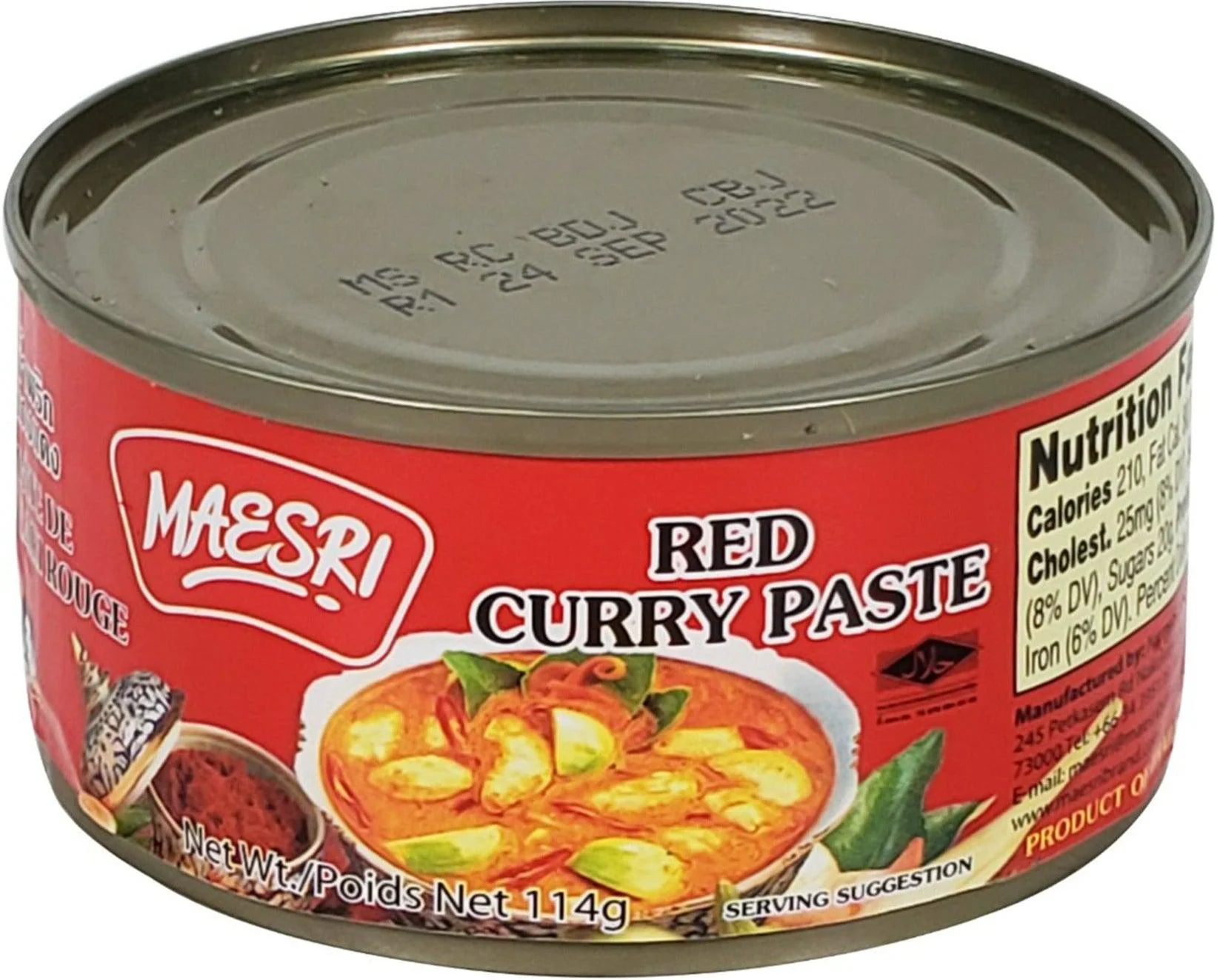
Maesri - Red Curry Paste
Maesri Red Curry Paste 114g in Bulk Low Price | Canada-wide Delivery
Maesri Red Curry Paste is a concentrated Thai curry base available in 114 g cans, with cases containing 48 units (5.47 kg total). This prepared curry paste combines traditional Thai spices and aromatics in a ready-to-use format for commercial kitchen applications. Delivery is available across Canada.
Common Commercial Applications
Restaurants, catering operations, and foodservice establishments use Maesri red curry paste as a foundation for Thai curry dishes, sauces, and marinades.
Typical users include:
- Thai and Asian fusion restaurants
- Hotels and hospitality venues with diverse menus
- Catering companies handling multi-cuisine events
- Institutional kitchens offering international menu options
- Food trucks specializing in Asian cuisine
- Quick-service restaurants with curry-based items
- Cafes and bistros featuring globally-inspired dishes
- Meal prep and food production facilities
- Grocery stores with prepared food sections
- Corporate dining facilities
Product Specifications and Characteristics
Package details:
- Individual can: 114 g net weight
- Case quantity: 48 cans
- Case weight: Approximately 5.47 kg
- Format: Canned concentrate requiring dilution
- Shelf-stable before opening
Product composition: Red curry paste typically contains chili peppers, garlic, lemongrass, galangal, shallots, kaffir lime, shrimp paste, and various spices. The specific formulation for Maesri red curry paste follows traditional Thai recipes. Check product labelling for complete ingredient information.
Physical characteristics:
- Thick, concentrated paste
- Deep red to reddish-brown colour
- Aromatic with characteristic Thai spice profile
- Requires mixing with liquid (coconut milk, broth, or water)
Culinary Uses and Preparation
Maesri red curry paste serves as a flavour base for multiple preparations:
Primary applications:
- Red curry with chicken, beef, pork, or seafood
- Vegetarian and tofu curry dishes
- Curry soups and noodle dishes
- Stir-fry sauces
- Marinades for grilled proteins
- Thai-inspired pizza or flatbread toppings
- Curry mayo and sandwich spreads
- Rice and grain bowl seasonings
Preparation guidelines:
- Typical ratio: 1-2 tablespoons paste per 400 ml coconut milk
- Dilution ratios vary based on desired heat level and flavour intensity
- Sauté paste briefly in oil before adding liquids to develop flavours
- Adjust quantity based on recipe requirements and taste preferences
- Combine with coconut milk, stock, or water as needed
Cooking methods:
- Simmer curries for 15-30 minutes after adding paste
- Add paste early in cooking process for integrated flavour
- Taste and adjust seasoning as needed (sugar, fish sauce, lime juice)
- Can be added to hot or cold preparations depending on application
Operational Advantages
Commercial kitchens benefit from several practical considerations:
- Eliminates time-consuming paste preparation from scratch
- Consistent flavour profile across batches
- Extended shelf life before opening
- Small package size allows for precise inventory control
- Standardizes recipe execution across multiple staff members
- Reduces need for extensive spice inventories
- Compact storage footprint compared to fresh ingredients
Storage and Handling
Before opening:
- Store in cool, dry location
- Shelf-stable at room temperature
- Check expiration dates and rotate stock accordingly
- Protect from direct heat sources
After opening:
- Transfer to non-reactive, airtight container or keep in original can
- Refrigerate promptly after opening
- Use within recommended timeframe (typically several weeks when refrigerated)
- Portion control: Remove only needed amount with clean utensils
- Avoid cross-contamination by using dedicated serving spoons
Allergen and Dietary Considerations
Red curry paste typically contains:
- Shrimp paste (shellfish allergen)
- May contain fish sauce in some formulations
- Check product labelling for specific allergen information
- Not suitable for shellfish allergies unless specifically noted
- Not typically vegetarian or vegan due to shrimp paste content
Verify current ingredient listings and allergen statements on product packaging for accurate information.
Case Purchasing Considerations
Inventory planning:
- 48-can case suits operations with regular curry menu items
- Calculate usage based on typical curry portions per service period
- Consider menu frequency and customer demand
- Small can size reduces waste from opened product
Cost efficiency:
- Case purchasing typically offers per-unit cost savings
- Compare against fresh ingredient costs plus labour
- Factor in consistency and reduced prep time
- Account for storage space requirements
Frequently Asked Questions
1. How much curry paste should I use per serving?
Usage varies by recipe and desired intensity. A general guideline is 1-2 tablespoons of paste per 400 ml coconut milk, serving 2-4 people. Adjust based on heat tolerance and flavour preferences.
2. Can Maesri red curry paste be used without coconut milk?
Yes, the paste can be diluted with chicken stock, vegetable broth, or water. Coconut milk provides traditional creaminess and richness, but alternative liquids work for different applications.
3. How long does the paste last after opening?
Once opened and refrigerated in an airtight container, red curry paste typically maintains quality for several weeks. Check for any signs of mould, off-odours, or discolouration before use.
4. Is red curry paste very spicy?
Red curry paste has moderate heat levels in traditional Thai preparations. Heat intensity varies by brand and individual sensitivity. The final dish heat depends on the amount of paste used and dilution ratio.
5. Can I adjust the heat level?
Yes, reduce the amount of paste used or increase the quantity of coconut milk or liquid to decrease heat. Adding sugar, lime juice, or additional vegetables also moderates spiciness.
6. What's the difference between red, green, and yellow curry paste?
Red curry paste uses red chilies and typically has a balanced, moderately spicy flavour. Green curry paste uses green chilies and is often spicier. Yellow curry paste includes turmeric and tends to be milder with earthy notes.
7. Can this paste be used for non-curry applications?
Yes, red curry paste works in marinades, stir-fries, dipping sauces, soup bases, and as a flavour enhancer in various Asian-inspired dishes.
8. Do I need to cook the paste before adding other ingredients?
Sautéing or "blooming" the paste in oil before adding liquids develops deeper flavour and aroma. This step is common in traditional preparation but not strictly required.
9. How many servings does one 114 g can make?
Serving yield depends on dilution and usage. One can typically produces enough paste for 4-8 curry portions when mixed with coconut milk at standard ratios. Calculate based on specific recipe requirements.
10. Is this paste gluten-free?
Many Thai curry pastes are naturally gluten-free, but verify with product labelling. Cross-contamination during processing may occur. Check packaging for specific gluten-free certifications if needed.
Businesses purchasing Maesri red curry paste in case quantities should assess typical curry dish frequency, storage capacity, and menu diversity when determining order volumes. The 114 g can size provides portion control flexibility while the 48-can case format supports operations with regular Thai curry offerings. Proper storage practices and inventory rotation help maintain product quality across Canadian foodservice operations.
Maesri Red Curry Paste 114g in Bulk Low Price | Canada-wide Delivery
Maesri Red Curry Paste is a concentrated Thai curry base available in 114 g cans, with cases containing 48 units (5.47 kg total). This prepared curry paste combines traditional Thai spices and aromatics in a ready-to-use format for commercial kitchen applications. Delivery is available across Canada.
Common Commercial Applications
Restaurants, catering operations, and foodservice establishments use Maesri red curry paste as a foundation for Thai curry dishes, sauces, and marinades.
Typical users include:
- Thai and Asian fusion restaurants
- Hotels and hospitality venues with diverse menus
- Catering companies handling multi-cuisine events
- Institutional kitchens offering international menu options
- Food trucks specializing in Asian cuisine
- Quick-service restaurants with curry-based items
- Cafes and bistros featuring globally-inspired dishes
- Meal prep and food production facilities
- Grocery stores with prepared food sections
- Corporate dining facilities
Product Specifications and Characteristics
Package details:
- Individual can: 114 g net weight
- Case quantity: 48 cans
- Case weight: Approximately 5.47 kg
- Format: Canned concentrate requiring dilution
- Shelf-stable before opening
Product composition: Red curry paste typically contains chili peppers, garlic, lemongrass, galangal, shallots, kaffir lime, shrimp paste, and various spices. The specific formulation for Maesri red curry paste follows traditional Thai recipes. Check product labelling for complete ingredient information.
Physical characteristics:
- Thick, concentrated paste
- Deep red to reddish-brown colour
- Aromatic with characteristic Thai spice profile
- Requires mixing with liquid (coconut milk, broth, or water)
Culinary Uses and Preparation
Maesri red curry paste serves as a flavour base for multiple preparations:
Primary applications:
- Red curry with chicken, beef, pork, or seafood
- Vegetarian and tofu curry dishes
- Curry soups and noodle dishes
- Stir-fry sauces
- Marinades for grilled proteins
- Thai-inspired pizza or flatbread toppings
- Curry mayo and sandwich spreads
- Rice and grain bowl seasonings
Preparation guidelines:
- Typical ratio: 1-2 tablespoons paste per 400 ml coconut milk
- Dilution ratios vary based on desired heat level and flavour intensity
- Sauté paste briefly in oil before adding liquids to develop flavours
- Adjust quantity based on recipe requirements and taste preferences
- Combine with coconut milk, stock, or water as needed
Cooking methods:
- Simmer curries for 15-30 minutes after adding paste
- Add paste early in cooking process for integrated flavour
- Taste and adjust seasoning as needed (sugar, fish sauce, lime juice)
- Can be added to hot or cold preparations depending on application
Operational Advantages
Commercial kitchens benefit from several practical considerations:
- Eliminates time-consuming paste preparation from scratch
- Consistent flavour profile across batches
- Extended shelf life before opening
- Small package size allows for precise inventory control
- Standardizes recipe execution across multiple staff members
- Reduces need for extensive spice inventories
- Compact storage footprint compared to fresh ingredients
Storage and Handling
Before opening:
- Store in cool, dry location
- Shelf-stable at room temperature
- Check expiration dates and rotate stock accordingly
- Protect from direct heat sources
After opening:
- Transfer to non-reactive, airtight container or keep in original can
- Refrigerate promptly after opening
- Use within recommended timeframe (typically several weeks when refrigerated)
- Portion control: Remove only needed amount with clean utensils
- Avoid cross-contamination by using dedicated serving spoons
Allergen and Dietary Considerations
Red curry paste typically contains:
- Shrimp paste (shellfish allergen)
- May contain fish sauce in some formulations
- Check product labelling for specific allergen information
- Not suitable for shellfish allergies unless specifically noted
- Not typically vegetarian or vegan due to shrimp paste content
Verify current ingredient listings and allergen statements on product packaging for accurate information.
Case Purchasing Considerations
Inventory planning:
- 48-can case suits operations with regular curry menu items
- Calculate usage based on typical curry portions per service period
- Consider menu frequency and customer demand
- Small can size reduces waste from opened product
Cost efficiency:
- Case purchasing typically offers per-unit cost savings
- Compare against fresh ingredient costs plus labour
- Factor in consistency and reduced prep time
- Account for storage space requirements
Frequently Asked Questions
1. How much curry paste should I use per serving?
Usage varies by recipe and desired intensity. A general guideline is 1-2 tablespoons of paste per 400 ml coconut milk, serving 2-4 people. Adjust based on heat tolerance and flavour preferences.
2. Can Maesri red curry paste be used without coconut milk?
Yes, the paste can be diluted with chicken stock, vegetable broth, or water. Coconut milk provides traditional creaminess and richness, but alternative liquids work for different applications.
3. How long does the paste last after opening?
Once opened and refrigerated in an airtight container, red curry paste typically maintains quality for several weeks. Check for any signs of mould, off-odours, or discolouration before use.
4. Is red curry paste very spicy?
Red curry paste has moderate heat levels in traditional Thai preparations. Heat intensity varies by brand and individual sensitivity. The final dish heat depends on the amount of paste used and dilution ratio.
5. Can I adjust the heat level?
Yes, reduce the amount of paste used or increase the quantity of coconut milk or liquid to decrease heat. Adding sugar, lime juice, or additional vegetables also moderates spiciness.
6. What's the difference between red, green, and yellow curry paste?
Red curry paste uses red chilies and typically has a balanced, moderately spicy flavour. Green curry paste uses green chilies and is often spicier. Yellow curry paste includes turmeric and tends to be milder with earthy notes.
7. Can this paste be used for non-curry applications?
Yes, red curry paste works in marinades, stir-fries, dipping sauces, soup bases, and as a flavour enhancer in various Asian-inspired dishes.
8. Do I need to cook the paste before adding other ingredients?
Sautéing or "blooming" the paste in oil before adding liquids develops deeper flavour and aroma. This step is common in traditional preparation but not strictly required.
9. How many servings does one 114 g can make?
Serving yield depends on dilution and usage. One can typically produces enough paste for 4-8 curry portions when mixed with coconut milk at standard ratios. Calculate based on specific recipe requirements.
10. Is this paste gluten-free?
Many Thai curry pastes are naturally gluten-free, but verify with product labelling. Cross-contamination during processing may occur. Check packaging for specific gluten-free certifications if needed.
Businesses purchasing Maesri red curry paste in case quantities should assess typical curry dish frequency, storage capacity, and menu diversity when determining order volumes. The 114 g can size provides portion control flexibility while the 48-can case format supports operations with regular Thai curry offerings. Proper storage practices and inventory rotation help maintain product quality across Canadian foodservice operations.
Original: $1.67
-70%$1.67
$0.50Description
Maesri Red Curry Paste 114g in Bulk Low Price | Canada-wide Delivery
Maesri Red Curry Paste is a concentrated Thai curry base available in 114 g cans, with cases containing 48 units (5.47 kg total). This prepared curry paste combines traditional Thai spices and aromatics in a ready-to-use format for commercial kitchen applications. Delivery is available across Canada.
Common Commercial Applications
Restaurants, catering operations, and foodservice establishments use Maesri red curry paste as a foundation for Thai curry dishes, sauces, and marinades.
Typical users include:
- Thai and Asian fusion restaurants
- Hotels and hospitality venues with diverse menus
- Catering companies handling multi-cuisine events
- Institutional kitchens offering international menu options
- Food trucks specializing in Asian cuisine
- Quick-service restaurants with curry-based items
- Cafes and bistros featuring globally-inspired dishes
- Meal prep and food production facilities
- Grocery stores with prepared food sections
- Corporate dining facilities
Product Specifications and Characteristics
Package details:
- Individual can: 114 g net weight
- Case quantity: 48 cans
- Case weight: Approximately 5.47 kg
- Format: Canned concentrate requiring dilution
- Shelf-stable before opening
Product composition: Red curry paste typically contains chili peppers, garlic, lemongrass, galangal, shallots, kaffir lime, shrimp paste, and various spices. The specific formulation for Maesri red curry paste follows traditional Thai recipes. Check product labelling for complete ingredient information.
Physical characteristics:
- Thick, concentrated paste
- Deep red to reddish-brown colour
- Aromatic with characteristic Thai spice profile
- Requires mixing with liquid (coconut milk, broth, or water)
Culinary Uses and Preparation
Maesri red curry paste serves as a flavour base for multiple preparations:
Primary applications:
- Red curry with chicken, beef, pork, or seafood
- Vegetarian and tofu curry dishes
- Curry soups and noodle dishes
- Stir-fry sauces
- Marinades for grilled proteins
- Thai-inspired pizza or flatbread toppings
- Curry mayo and sandwich spreads
- Rice and grain bowl seasonings
Preparation guidelines:
- Typical ratio: 1-2 tablespoons paste per 400 ml coconut milk
- Dilution ratios vary based on desired heat level and flavour intensity
- Sauté paste briefly in oil before adding liquids to develop flavours
- Adjust quantity based on recipe requirements and taste preferences
- Combine with coconut milk, stock, or water as needed
Cooking methods:
- Simmer curries for 15-30 minutes after adding paste
- Add paste early in cooking process for integrated flavour
- Taste and adjust seasoning as needed (sugar, fish sauce, lime juice)
- Can be added to hot or cold preparations depending on application
Operational Advantages
Commercial kitchens benefit from several practical considerations:
- Eliminates time-consuming paste preparation from scratch
- Consistent flavour profile across batches
- Extended shelf life before opening
- Small package size allows for precise inventory control
- Standardizes recipe execution across multiple staff members
- Reduces need for extensive spice inventories
- Compact storage footprint compared to fresh ingredients
Storage and Handling
Before opening:
- Store in cool, dry location
- Shelf-stable at room temperature
- Check expiration dates and rotate stock accordingly
- Protect from direct heat sources
After opening:
- Transfer to non-reactive, airtight container or keep in original can
- Refrigerate promptly after opening
- Use within recommended timeframe (typically several weeks when refrigerated)
- Portion control: Remove only needed amount with clean utensils
- Avoid cross-contamination by using dedicated serving spoons
Allergen and Dietary Considerations
Red curry paste typically contains:
- Shrimp paste (shellfish allergen)
- May contain fish sauce in some formulations
- Check product labelling for specific allergen information
- Not suitable for shellfish allergies unless specifically noted
- Not typically vegetarian or vegan due to shrimp paste content
Verify current ingredient listings and allergen statements on product packaging for accurate information.
Case Purchasing Considerations
Inventory planning:
- 48-can case suits operations with regular curry menu items
- Calculate usage based on typical curry portions per service period
- Consider menu frequency and customer demand
- Small can size reduces waste from opened product
Cost efficiency:
- Case purchasing typically offers per-unit cost savings
- Compare against fresh ingredient costs plus labour
- Factor in consistency and reduced prep time
- Account for storage space requirements
Frequently Asked Questions
1. How much curry paste should I use per serving?
Usage varies by recipe and desired intensity. A general guideline is 1-2 tablespoons of paste per 400 ml coconut milk, serving 2-4 people. Adjust based on heat tolerance and flavour preferences.
2. Can Maesri red curry paste be used without coconut milk?
Yes, the paste can be diluted with chicken stock, vegetable broth, or water. Coconut milk provides traditional creaminess and richness, but alternative liquids work for different applications.
3. How long does the paste last after opening?
Once opened and refrigerated in an airtight container, red curry paste typically maintains quality for several weeks. Check for any signs of mould, off-odours, or discolouration before use.
4. Is red curry paste very spicy?
Red curry paste has moderate heat levels in traditional Thai preparations. Heat intensity varies by brand and individual sensitivity. The final dish heat depends on the amount of paste used and dilution ratio.
5. Can I adjust the heat level?
Yes, reduce the amount of paste used or increase the quantity of coconut milk or liquid to decrease heat. Adding sugar, lime juice, or additional vegetables also moderates spiciness.
6. What's the difference between red, green, and yellow curry paste?
Red curry paste uses red chilies and typically has a balanced, moderately spicy flavour. Green curry paste uses green chilies and is often spicier. Yellow curry paste includes turmeric and tends to be milder with earthy notes.
7. Can this paste be used for non-curry applications?
Yes, red curry paste works in marinades, stir-fries, dipping sauces, soup bases, and as a flavour enhancer in various Asian-inspired dishes.
8. Do I need to cook the paste before adding other ingredients?
Sautéing or "blooming" the paste in oil before adding liquids develops deeper flavour and aroma. This step is common in traditional preparation but not strictly required.
9. How many servings does one 114 g can make?
Serving yield depends on dilution and usage. One can typically produces enough paste for 4-8 curry portions when mixed with coconut milk at standard ratios. Calculate based on specific recipe requirements.
10. Is this paste gluten-free?
Many Thai curry pastes are naturally gluten-free, but verify with product labelling. Cross-contamination during processing may occur. Check packaging for specific gluten-free certifications if needed.
Businesses purchasing Maesri red curry paste in case quantities should assess typical curry dish frequency, storage capacity, and menu diversity when determining order volumes. The 114 g can size provides portion control flexibility while the 48-can case format supports operations with regular Thai curry offerings. Proper storage practices and inventory rotation help maintain product quality across Canadian foodservice operations.