Allen's - White - Vinegar
Allen's White Vinegar for Food 4lt in Bulk - Delivering Across Canada
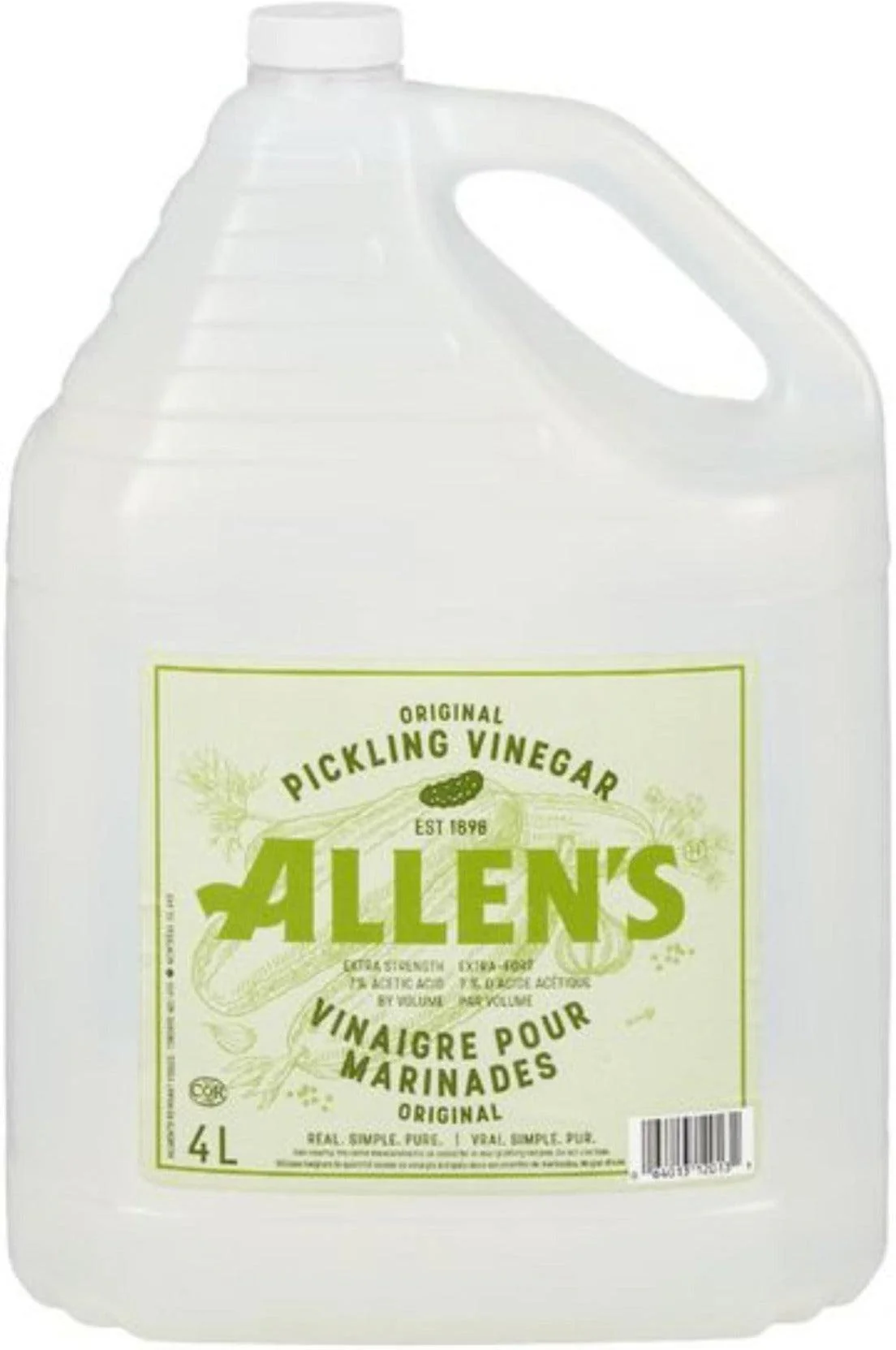
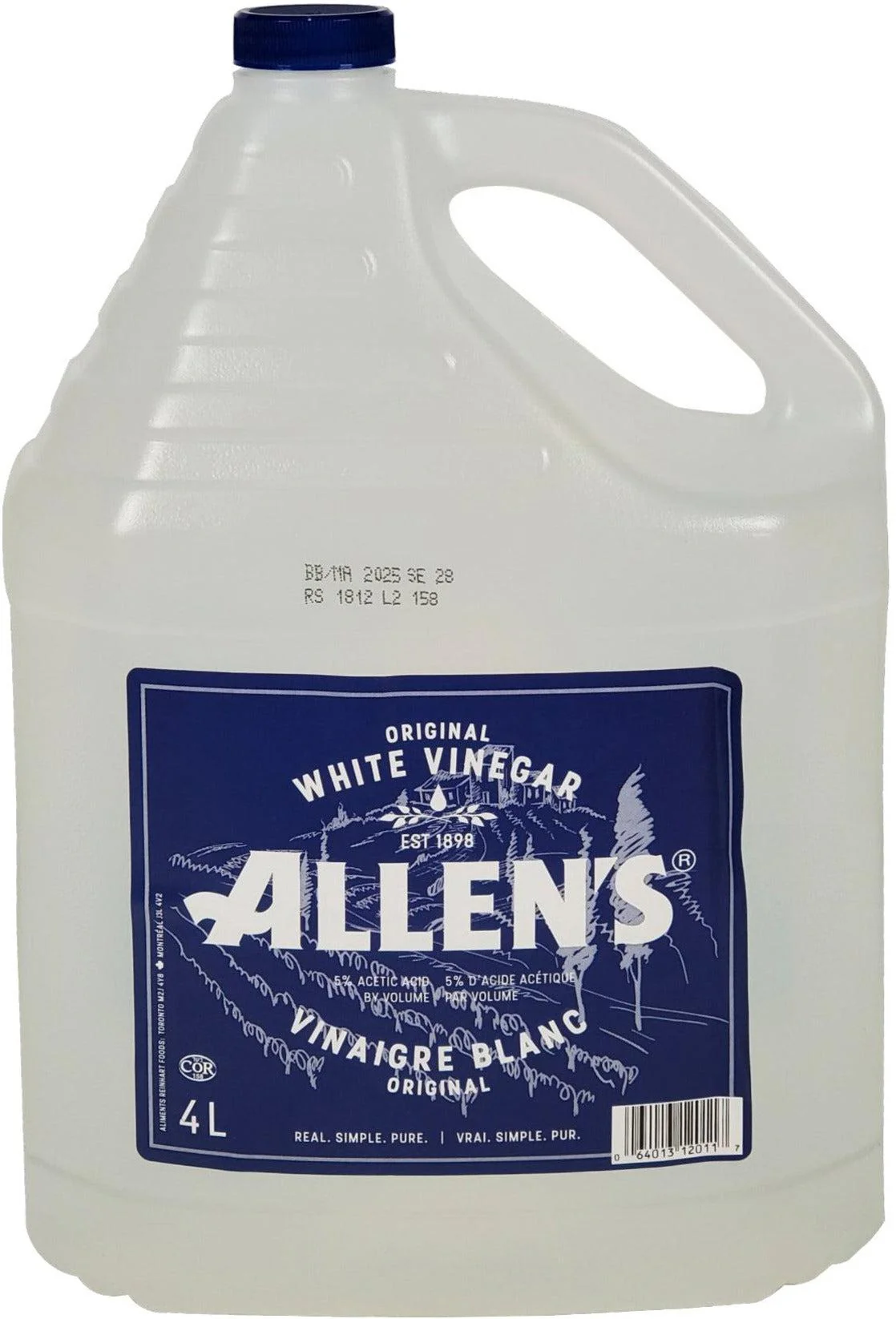
Allen's white vinegar is a clear, distilled vinegar available in 4 liter bottles or cases containing 24 liters (6 x 4 L bottles) for commercial foodservice and retail operations. This multi-purpose acidic liquid serves both culinary and cleaning applications in professional settings. Available for delivery across Canada.
Common Commercial Applications
Restaurants, catering operations, institutional kitchens, and food service establishments use white vinegar for cooking, pickling, cleaning, and food preparation tasks. The neutral flavor and high acidity make it functional across diverse applications.
Typical users include:
- Restaurants and dining establishments for cooking and cleaning
- Commercial kitchens requiring acidic ingredients for recipes
- Catering companies handling food preparation and equipment maintenance
- Food trucks and mobile vendors with space-efficient ingredient needs
- Institutional cafeterias in schools, hospitals, and corporate facilities
- Delis and sandwich shops for pickling and condiment preparation
- Bakeries using vinegar in certain dough formulations
- Cafes and quick-service establishments
- Retail food operations for in-house preparation
- Cleaning and janitorial services in food facilities
Product Specifications and Characteristics
Container specifications:
- Volume: 4 liters per bottle
- Case count: 6 bottles per case
- Total case volume: 24 liters
- Material: Clear distilled white vinegar
- Acidity level: Typically 5% acetic acid (standard for white vinegar)
Product characteristics:
- Clear, colorless liquid
- Sharp, acidic aroma and taste
- Made from distilled grain alcohol
- No added colors or flavors
- Water and acetic acid composition
- Shelf-stable at room temperature
The 4 liter format provides bulk quantity for commercial operations while maintaining manageable handling size.
Culinary Uses in Commercial Kitchens
White vinegar serves multiple functions in food preparation:
Cooking and recipe applications:
- Pickling vegetables and condiments
- Salad dressing and vinaigrette bases
- Marinades for meat, poultry, and seafood
- Baking ingredient (reacts with baking soda)
- Coleslaw and slaw dressings
- Fish and chips condiment
- Sauce and glaze acidity balancing
- Canning and food preservation
Food preparation tasks:
- Washing produce to remove residues
- Poaching liquid for eggs
- Curd formation in cheese making
- pH adjustment in recipes
- Tenderizing tough cuts of meat
- Preventing discoloration of certain vegetables
Condiment service:
- Table condiment for fish and chips
- Self-serve condiment stations
- Flavoring component for sauces
Non-Food Commercial Uses
Beyond cooking, white vinegar functions in operational tasks:
Cleaning applications:
- Surface sanitizing and degreasing
- Equipment descaling (coffee makers, kettles)
- Removing mineral deposits and hard water stains
- Glass and window cleaning
- Stainless steel polishing
- Drain maintenance and odor control
- Floor cleaning solutions
Note: For cleaning purposes, verify that food-grade vinegar meets facility requirements. Some operations use industrial-grade vinegar for cleaning to differentiate from culinary stock.
Storage and Handling
Proper storage maintains product quality:
- Store in cool, dry locations away from direct sunlight
- Room temperature storage is suitable
- Keep bottles tightly capped when not in use
- No refrigeration required
- Shelf-stable with extended shelf life
- Avoid contamination from foreign substances
- Store away from strong bases or reactive materials
- Maintain first-in, first-out rotation
Handling considerations:
- Full 4 liter bottle weighs approximately 4-4.5 kg
- Acidic liquid—avoid contact with eyes and prolonged skin exposure
- Use in well-ventilated areas when using in large quantities
- Standard pouring cap or dispensing system recommended for portion control
Operational Considerations for Commercial Buyers
Businesses using white vinegar in commercial quantities should account for several practical factors:
Inventory planning: Calculate usage based on menu items, cleaning protocols, and operational needs
Multi-purpose functionality: Single product serves cooking, pickling, and cleaning needs
Cost management: Bulk purchasing reduces per-liter cost compared to retail sizes
Storage efficiency: 4 liter bottles balance bulk quantity with space management
Safety protocols: Train staff on proper handling of acidic substances
Quality standards: Ensure culinary and cleaning uses maintain appropriate separation
Yield estimation: Track consumption patterns across different applications
Dispensing systems: Consider pump dispensers or portion-controlled systems for high-volume use
Case Quantity and Purchasing Considerations
4 liter bottle:
- Suitable for moderate-volume operations
- Easier handling for staff
- Allows for separate storage of culinary and cleaning supplies
- Fits standard storage shelves and cabinets
Case of 24 liters (6 x 4 L):
- Cost efficiency through bulk purchasing
- Reduces reorder frequency
- Appropriate for high-volume operations
- Requires adequate storage space
- Long shelf life supports advance purchasing
White Vinegar vs. Other Vinegar Types
Understanding distinctions between vinegar varieties helps in product selection:
White vinegar (distilled):
- Clear, colorless appearance
- Sharp, clean acidic taste without additional flavors
- Neutral profile suitable for diverse applications
- Most economical vinegar type
- Multi-purpose functionality
Apple cider vinegar:
- Amber color from apple origin
- Fruity, slightly sweet undertones
- Primarily culinary use
- Higher cost per liter
Wine vinegar (red/white):
- Color and flavor from wine base
- Distinct taste profiles
- Specialty culinary applications
- Premium pricing
Balsamic vinegar:
- Dark, syrupy consistency
- Complex sweet-tart flavor
- High-end culinary use
- Significantly higher cost
Many operations stock white vinegar as a workhorse product alongside specialty vinegars for specific dishes.
Acidity and pH Considerations
White vinegar typically contains 5% acetic acid, resulting in a pH of approximately 2.4-3.4. This acidity level serves functional purposes:
- Sufficient for most pickling applications
- Appropriate for cleaning and descaling
- Balances alkaline ingredients in recipes
- Inhibits bacterial growth in certain food preparations
- Standard concentration for food safety in home canning applications
Higher acidity vinegars (6-7%) exist for industrial applications but are less common in foodservice.
Frequently Asked Questions
What is the acidity level of Allen's white vinegar?
Standard white vinegar contains 5% acetic acid. Check product labeling for specific acidity confirmation, as this is the typical concentration for food-grade white vinegar.
Can white vinegar be used for both cooking and cleaning?
Yes, food-grade white vinegar can serve both purposes. However, many operations maintain separate bottles to prevent cross-contamination and ensure clarity in inventory management.
Does white vinegar expire or go bad?
White vinegar has an indefinite shelf life when stored properly in sealed containers. The high acidity acts as a natural preservative. Quality may diminish over extended periods, but the product remains safe.
How should I dilute white vinegar for cleaning purposes?
Dilution ratios vary by cleaning task. Common ratios range from 1:1 (equal parts water and vinegar) for heavy-duty cleaning to 1:3 for lighter tasks. Test on small areas first for specific surfaces.
Can white vinegar be used for canning and pickling?
Yes, 5% acidity white vinegar is commonly used for pickling and some canning applications. Always follow tested recipes and food safety guidelines for preservation methods.
Is white vinegar safe for all food contact surfaces?
White vinegar is generally safe for food contact surfaces including stainless steel, glass, and ceramic. Avoid using on natural stone, cast iron, or surfaces sensitive to acidic substances. Rinse thoroughly after cleaning.
How much vinegar should I use in recipes?
Recipe amounts vary widely based on the dish. Follow specific recipe guidelines. For pickling, typical ratios are 1:1 or 2:1 (vinegar to water) depending on desired acidity and recipe requirements.
Can I use white vinegar to clean coffee makers and kettles?
Yes, white vinegar effectively removes mineral deposits and scale from coffee equipment. Run a brew cycle with diluted vinegar (typically 1:1 with water), then run 2-3 cycles with plain water to rinse thoroughly.
What's the difference between distilled white vinegar and cleaning vinegar?
Food-grade distilled white vinegar contains 5% acetic acid. Cleaning vinegar typically contains 6-7% acetic acid for stronger cleaning power. Food-grade vinegar can be used for cleaning, but cleaning vinegar should not be used for food.
How should opened bottles of white vinegar be stored?
Keep bottles tightly capped and store at room temperature in a cool, dry location. Refrigeration is not necessary. Avoid contamination by using clean utensils when dispensing.
Businesses purchasing Allen's white vinegar in 4 liter bottles or cases should evaluate typical usage across culinary and operational applications, storage capacity, and consumption patterns. The bulk format works for operations of various sizes, from small cafes to large institutional kitchens, providing flexibility in inventory management while reducing per-unit costs. Establishing protocols for culinary versus cleaning use, proper storage rotation, and staff training on handling helps maintain operational efficiency across Canadian foodservice and retail operations.
Allen's White Vinegar for Food 4lt in Bulk - Delivering Across Canada
Allen's white vinegar is a clear, distilled vinegar available in 4 liter bottles or cases containing 24 liters (6 x 4 L bottles) for commercial foodservice and retail operations. This multi-purpose acidic liquid serves both culinary and cleaning applications in professional settings. Available for delivery across Canada.
Common Commercial Applications
Restaurants, catering operations, institutional kitchens, and food service establishments use white vinegar for cooking, pickling, cleaning, and food preparation tasks. The neutral flavor and high acidity make it functional across diverse applications.
Typical users include:
- Restaurants and dining establishments for cooking and cleaning
- Commercial kitchens requiring acidic ingredients for recipes
- Catering companies handling food preparation and equipment maintenance
- Food trucks and mobile vendors with space-efficient ingredient needs
- Institutional cafeterias in schools, hospitals, and corporate facilities
- Delis and sandwich shops for pickling and condiment preparation
- Bakeries using vinegar in certain dough formulations
- Cafes and quick-service establishments
- Retail food operations for in-house preparation
- Cleaning and janitorial services in food facilities
Product Specifications and Characteristics
Container specifications:
- Volume: 4 liters per bottle
- Case count: 6 bottles per case
- Total case volume: 24 liters
- Material: Clear distilled white vinegar
- Acidity level: Typically 5% acetic acid (standard for white vinegar)
Product characteristics:
- Clear, colorless liquid
- Sharp, acidic aroma and taste
- Made from distilled grain alcohol
- No added colors or flavors
- Water and acetic acid composition
- Shelf-stable at room temperature
The 4 liter format provides bulk quantity for commercial operations while maintaining manageable handling size.
Culinary Uses in Commercial Kitchens
White vinegar serves multiple functions in food preparation:
Cooking and recipe applications:
- Pickling vegetables and condiments
- Salad dressing and vinaigrette bases
- Marinades for meat, poultry, and seafood
- Baking ingredient (reacts with baking soda)
- Coleslaw and slaw dressings
- Fish and chips condiment
- Sauce and glaze acidity balancing
- Canning and food preservation
Food preparation tasks:
- Washing produce to remove residues
- Poaching liquid for eggs
- Curd formation in cheese making
- pH adjustment in recipes
- Tenderizing tough cuts of meat
- Preventing discoloration of certain vegetables
Condiment service:
- Table condiment for fish and chips
- Self-serve condiment stations
- Flavoring component for sauces
Non-Food Commercial Uses
Beyond cooking, white vinegar functions in operational tasks:
Cleaning applications:
- Surface sanitizing and degreasing
- Equipment descaling (coffee makers, kettles)
- Removing mineral deposits and hard water stains
- Glass and window cleaning
- Stainless steel polishing
- Drain maintenance and odor control
- Floor cleaning solutions
Note: For cleaning purposes, verify that food-grade vinegar meets facility requirements. Some operations use industrial-grade vinegar for cleaning to differentiate from culinary stock.
Storage and Handling
Proper storage maintains product quality:
- Store in cool, dry locations away from direct sunlight
- Room temperature storage is suitable
- Keep bottles tightly capped when not in use
- No refrigeration required
- Shelf-stable with extended shelf life
- Avoid contamination from foreign substances
- Store away from strong bases or reactive materials
- Maintain first-in, first-out rotation
Handling considerations:
- Full 4 liter bottle weighs approximately 4-4.5 kg
- Acidic liquid—avoid contact with eyes and prolonged skin exposure
- Use in well-ventilated areas when using in large quantities
- Standard pouring cap or dispensing system recommended for portion control
Operational Considerations for Commercial Buyers
Businesses using white vinegar in commercial quantities should account for several practical factors:
Inventory planning: Calculate usage based on menu items, cleaning protocols, and operational needs
Multi-purpose functionality: Single product serves cooking, pickling, and cleaning needs
Cost management: Bulk purchasing reduces per-liter cost compared to retail sizes
Storage efficiency: 4 liter bottles balance bulk quantity with space management
Safety protocols: Train staff on proper handling of acidic substances
Quality standards: Ensure culinary and cleaning uses maintain appropriate separation
Yield estimation: Track consumption patterns across different applications
Dispensing systems: Consider pump dispensers or portion-controlled systems for high-volume use
Case Quantity and Purchasing Considerations
4 liter bottle:
- Suitable for moderate-volume operations
- Easier handling for staff
- Allows for separate storage of culinary and cleaning supplies
- Fits standard storage shelves and cabinets
Case of 24 liters (6 x 4 L):
- Cost efficiency through bulk purchasing
- Reduces reorder frequency
- Appropriate for high-volume operations
- Requires adequate storage space
- Long shelf life supports advance purchasing
White Vinegar vs. Other Vinegar Types
Understanding distinctions between vinegar varieties helps in product selection:
White vinegar (distilled):
- Clear, colorless appearance
- Sharp, clean acidic taste without additional flavors
- Neutral profile suitable for diverse applications
- Most economical vinegar type
- Multi-purpose functionality
Apple cider vinegar:
- Amber color from apple origin
- Fruity, slightly sweet undertones
- Primarily culinary use
- Higher cost per liter
Wine vinegar (red/white):
- Color and flavor from wine base
- Distinct taste profiles
- Specialty culinary applications
- Premium pricing
Balsamic vinegar:
- Dark, syrupy consistency
- Complex sweet-tart flavor
- High-end culinary use
- Significantly higher cost
Many operations stock white vinegar as a workhorse product alongside specialty vinegars for specific dishes.
Acidity and pH Considerations
White vinegar typically contains 5% acetic acid, resulting in a pH of approximately 2.4-3.4. This acidity level serves functional purposes:
- Sufficient for most pickling applications
- Appropriate for cleaning and descaling
- Balances alkaline ingredients in recipes
- Inhibits bacterial growth in certain food preparations
- Standard concentration for food safety in home canning applications
Higher acidity vinegars (6-7%) exist for industrial applications but are less common in foodservice.
Frequently Asked Questions
What is the acidity level of Allen's white vinegar?
Standard white vinegar contains 5% acetic acid. Check product labeling for specific acidity confirmation, as this is the typical concentration for food-grade white vinegar.
Can white vinegar be used for both cooking and cleaning?
Yes, food-grade white vinegar can serve both purposes. However, many operations maintain separate bottles to prevent cross-contamination and ensure clarity in inventory management.
Does white vinegar expire or go bad?
White vinegar has an indefinite shelf life when stored properly in sealed containers. The high acidity acts as a natural preservative. Quality may diminish over extended periods, but the product remains safe.
How should I dilute white vinegar for cleaning purposes?
Dilution ratios vary by cleaning task. Common ratios range from 1:1 (equal parts water and vinegar) for heavy-duty cleaning to 1:3 for lighter tasks. Test on small areas first for specific surfaces.
Can white vinegar be used for canning and pickling?
Yes, 5% acidity white vinegar is commonly used for pickling and some canning applications. Always follow tested recipes and food safety guidelines for preservation methods.
Is white vinegar safe for all food contact surfaces?
White vinegar is generally safe for food contact surfaces including stainless steel, glass, and ceramic. Avoid using on natural stone, cast iron, or surfaces sensitive to acidic substances. Rinse thoroughly after cleaning.
How much vinegar should I use in recipes?
Recipe amounts vary widely based on the dish. Follow specific recipe guidelines. For pickling, typical ratios are 1:1 or 2:1 (vinegar to water) depending on desired acidity and recipe requirements.
Can I use white vinegar to clean coffee makers and kettles?
Yes, white vinegar effectively removes mineral deposits and scale from coffee equipment. Run a brew cycle with diluted vinegar (typically 1:1 with water), then run 2-3 cycles with plain water to rinse thoroughly.
What's the difference between distilled white vinegar and cleaning vinegar?
Food-grade distilled white vinegar contains 5% acetic acid. Cleaning vinegar typically contains 6-7% acetic acid for stronger cleaning power. Food-grade vinegar can be used for cleaning, but cleaning vinegar should not be used for food.
How should opened bottles of white vinegar be stored?
Keep bottles tightly capped and store at room temperature in a cool, dry location. Refrigeration is not necessary. Avoid contamination by using clean utensils when dispensing.
Businesses purchasing Allen's white vinegar in 4 liter bottles or cases should evaluate typical usage across culinary and operational applications, storage capacity, and consumption patterns. The bulk format works for operations of various sizes, from small cafes to large institutional kitchens, providing flexibility in inventory management while reducing per-unit costs. Establishing protocols for culinary versus cleaning use, proper storage rotation, and staff training on handling helps maintain operational efficiency across Canadian foodservice and retail operations.
Description
Allen's White Vinegar for Food 4lt in Bulk - Delivering Across Canada
Allen's white vinegar is a clear, distilled vinegar available in 4 liter bottles or cases containing 24 liters (6 x 4 L bottles) for commercial foodservice and retail operations. This multi-purpose acidic liquid serves both culinary and cleaning applications in professional settings. Available for delivery across Canada.
Common Commercial Applications
Restaurants, catering operations, institutional kitchens, and food service establishments use white vinegar for cooking, pickling, cleaning, and food preparation tasks. The neutral flavor and high acidity make it functional across diverse applications.
Typical users include:
- Restaurants and dining establishments for cooking and cleaning
- Commercial kitchens requiring acidic ingredients for recipes
- Catering companies handling food preparation and equipment maintenance
- Food trucks and mobile vendors with space-efficient ingredient needs
- Institutional cafeterias in schools, hospitals, and corporate facilities
- Delis and sandwich shops for pickling and condiment preparation
- Bakeries using vinegar in certain dough formulations
- Cafes and quick-service establishments
- Retail food operations for in-house preparation
- Cleaning and janitorial services in food facilities
Product Specifications and Characteristics
Container specifications:
- Volume: 4 liters per bottle
- Case count: 6 bottles per case
- Total case volume: 24 liters
- Material: Clear distilled white vinegar
- Acidity level: Typically 5% acetic acid (standard for white vinegar)
Product characteristics:
- Clear, colorless liquid
- Sharp, acidic aroma and taste
- Made from distilled grain alcohol
- No added colors or flavors
- Water and acetic acid composition
- Shelf-stable at room temperature
The 4 liter format provides bulk quantity for commercial operations while maintaining manageable handling size.
Culinary Uses in Commercial Kitchens
White vinegar serves multiple functions in food preparation:
Cooking and recipe applications:
- Pickling vegetables and condiments
- Salad dressing and vinaigrette bases
- Marinades for meat, poultry, and seafood
- Baking ingredient (reacts with baking soda)
- Coleslaw and slaw dressings
- Fish and chips condiment
- Sauce and glaze acidity balancing
- Canning and food preservation
Food preparation tasks:
- Washing produce to remove residues
- Poaching liquid for eggs
- Curd formation in cheese making
- pH adjustment in recipes
- Tenderizing tough cuts of meat
- Preventing discoloration of certain vegetables
Condiment service:
- Table condiment for fish and chips
- Self-serve condiment stations
- Flavoring component for sauces
Non-Food Commercial Uses
Beyond cooking, white vinegar functions in operational tasks:
Cleaning applications:
- Surface sanitizing and degreasing
- Equipment descaling (coffee makers, kettles)
- Removing mineral deposits and hard water stains
- Glass and window cleaning
- Stainless steel polishing
- Drain maintenance and odor control
- Floor cleaning solutions
Note: For cleaning purposes, verify that food-grade vinegar meets facility requirements. Some operations use industrial-grade vinegar for cleaning to differentiate from culinary stock.
Storage and Handling
Proper storage maintains product quality:
- Store in cool, dry locations away from direct sunlight
- Room temperature storage is suitable
- Keep bottles tightly capped when not in use
- No refrigeration required
- Shelf-stable with extended shelf life
- Avoid contamination from foreign substances
- Store away from strong bases or reactive materials
- Maintain first-in, first-out rotation
Handling considerations:
- Full 4 liter bottle weighs approximately 4-4.5 kg
- Acidic liquid—avoid contact with eyes and prolonged skin exposure
- Use in well-ventilated areas when using in large quantities
- Standard pouring cap or dispensing system recommended for portion control
Operational Considerations for Commercial Buyers
Businesses using white vinegar in commercial quantities should account for several practical factors:
Inventory planning: Calculate usage based on menu items, cleaning protocols, and operational needs
Multi-purpose functionality: Single product serves cooking, pickling, and cleaning needs
Cost management: Bulk purchasing reduces per-liter cost compared to retail sizes
Storage efficiency: 4 liter bottles balance bulk quantity with space management
Safety protocols: Train staff on proper handling of acidic substances
Quality standards: Ensure culinary and cleaning uses maintain appropriate separation
Yield estimation: Track consumption patterns across different applications
Dispensing systems: Consider pump dispensers or portion-controlled systems for high-volume use
Case Quantity and Purchasing Considerations
4 liter bottle:
- Suitable for moderate-volume operations
- Easier handling for staff
- Allows for separate storage of culinary and cleaning supplies
- Fits standard storage shelves and cabinets
Case of 24 liters (6 x 4 L):
- Cost efficiency through bulk purchasing
- Reduces reorder frequency
- Appropriate for high-volume operations
- Requires adequate storage space
- Long shelf life supports advance purchasing
White Vinegar vs. Other Vinegar Types
Understanding distinctions between vinegar varieties helps in product selection:
White vinegar (distilled):
- Clear, colorless appearance
- Sharp, clean acidic taste without additional flavors
- Neutral profile suitable for diverse applications
- Most economical vinegar type
- Multi-purpose functionality
Apple cider vinegar:
- Amber color from apple origin
- Fruity, slightly sweet undertones
- Primarily culinary use
- Higher cost per liter
Wine vinegar (red/white):
- Color and flavor from wine base
- Distinct taste profiles
- Specialty culinary applications
- Premium pricing
Balsamic vinegar:
- Dark, syrupy consistency
- Complex sweet-tart flavor
- High-end culinary use
- Significantly higher cost
Many operations stock white vinegar as a workhorse product alongside specialty vinegars for specific dishes.
Acidity and pH Considerations
White vinegar typically contains 5% acetic acid, resulting in a pH of approximately 2.4-3.4. This acidity level serves functional purposes:
- Sufficient for most pickling applications
- Appropriate for cleaning and descaling
- Balances alkaline ingredients in recipes
- Inhibits bacterial growth in certain food preparations
- Standard concentration for food safety in home canning applications
Higher acidity vinegars (6-7%) exist for industrial applications but are less common in foodservice.
Frequently Asked Questions
What is the acidity level of Allen's white vinegar?
Standard white vinegar contains 5% acetic acid. Check product labeling for specific acidity confirmation, as this is the typical concentration for food-grade white vinegar.
Can white vinegar be used for both cooking and cleaning?
Yes, food-grade white vinegar can serve both purposes. However, many operations maintain separate bottles to prevent cross-contamination and ensure clarity in inventory management.
Does white vinegar expire or go bad?
White vinegar has an indefinite shelf life when stored properly in sealed containers. The high acidity acts as a natural preservative. Quality may diminish over extended periods, but the product remains safe.
How should I dilute white vinegar for cleaning purposes?
Dilution ratios vary by cleaning task. Common ratios range from 1:1 (equal parts water and vinegar) for heavy-duty cleaning to 1:3 for lighter tasks. Test on small areas first for specific surfaces.
Can white vinegar be used for canning and pickling?
Yes, 5% acidity white vinegar is commonly used for pickling and some canning applications. Always follow tested recipes and food safety guidelines for preservation methods.
Is white vinegar safe for all food contact surfaces?
White vinegar is generally safe for food contact surfaces including stainless steel, glass, and ceramic. Avoid using on natural stone, cast iron, or surfaces sensitive to acidic substances. Rinse thoroughly after cleaning.
How much vinegar should I use in recipes?
Recipe amounts vary widely based on the dish. Follow specific recipe guidelines. For pickling, typical ratios are 1:1 or 2:1 (vinegar to water) depending on desired acidity and recipe requirements.
Can I use white vinegar to clean coffee makers and kettles?
Yes, white vinegar effectively removes mineral deposits and scale from coffee equipment. Run a brew cycle with diluted vinegar (typically 1:1 with water), then run 2-3 cycles with plain water to rinse thoroughly.
What's the difference between distilled white vinegar and cleaning vinegar?
Food-grade distilled white vinegar contains 5% acetic acid. Cleaning vinegar typically contains 6-7% acetic acid for stronger cleaning power. Food-grade vinegar can be used for cleaning, but cleaning vinegar should not be used for food.
How should opened bottles of white vinegar be stored?
Keep bottles tightly capped and store at room temperature in a cool, dry location. Refrigeration is not necessary. Avoid contamination by using clean utensils when dispensing.
Businesses purchasing Allen's white vinegar in 4 liter bottles or cases should evaluate typical usage across culinary and operational applications, storage capacity, and consumption patterns. The bulk format works for operations of various sizes, from small cafes to large institutional kitchens, providing flexibility in inventory management while reducing per-unit costs. Establishing protocols for culinary versus cleaning use, proper storage rotation, and staff training on handling helps maintain operational efficiency across Canadian foodservice and retail operations.